
Mulch plays a bigger role in Port Stephens gardens than most homeowners realise. With sandy…
How Often Should You Mow Your Lawn in Lake Macquarie?
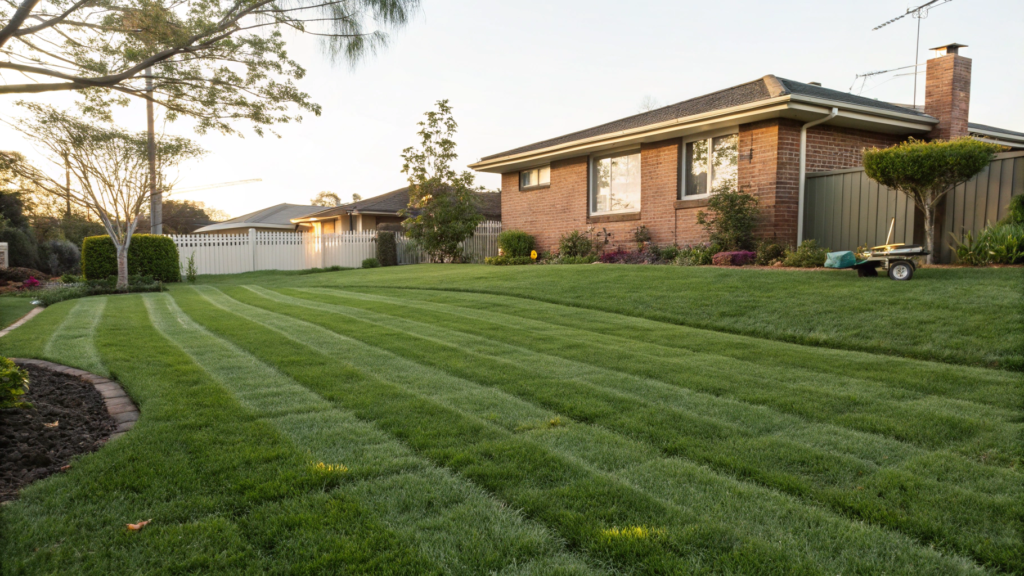
Lake Macquarie’s warm temperate climate creates real variation in how fast grass grows across the year, and that variation is exactly why so many local lawns end up either overgrown and stressed or scalped from being cut too often on a fixed weekly schedule. Buffalo and couch — the two most common turf types across Lake Macquarie properties — respond differently to heat, humidity, and rainfall, which means the right mowing frequency in December looks nothing like the right frequency in July.
Add in the region’s coastal proximity, where salt-laden air and sandy soils can behave differently to the clay-heavy inland suburbs, and it’s easy to see why a one-size-fits-all mowing routine rarely works well for long.
This guide sets out a practical, season-by-season mowing schedule for Lake Macquarie homes, covering how often to mow through peak summer growth, what changes in the cooler months, and the specific signs that a lawn needs cutting sooner than planned, regardless of what the calendar says. It also compares coastal and inland growth patterns directly, so homeowners can adjust their schedule to their actual property rather than a generic guideline.
The result is a mowing rhythm that keeps the lawn healthy, tidy, and low-stress to maintain.
As a general rule, Lake Macquarie lawns need mowing weekly during the warmer months (roughly October through March) and fortnightly through the cooler months (April through September). Buffalo lawns typically need slightly less frequent cutting than couch, which grows faster and tolerates a shorter cut. The right frequency also depends on rainfall, fertiliser use, and whether a property sits on the coast or further inland, all covered in detail below.
Why Mowing Frequency Changes Through the Year
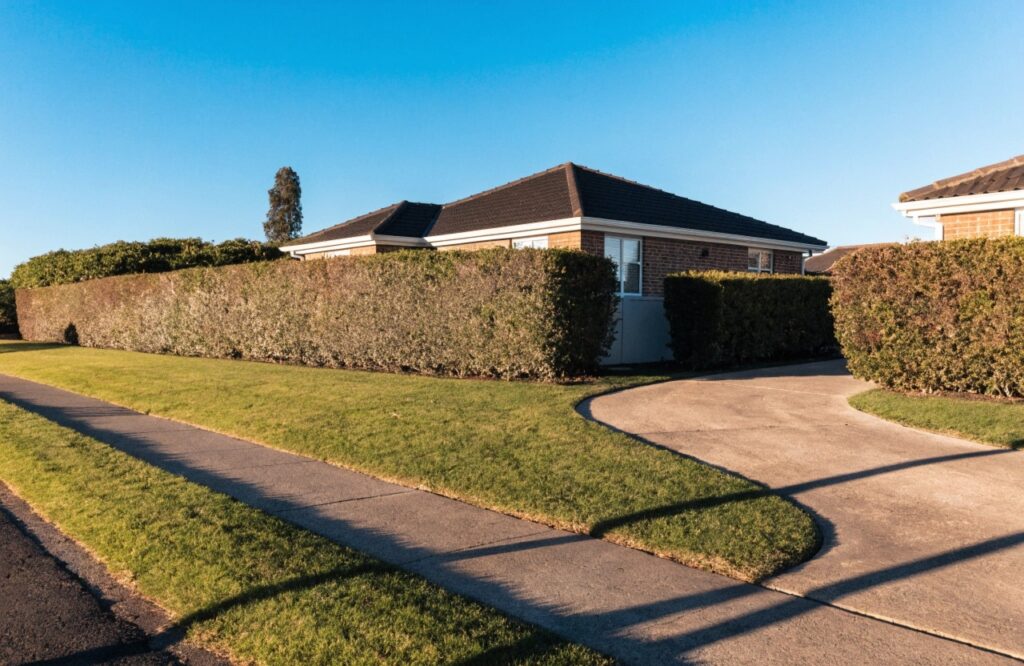
Grass growth is driven by a combination of temperature, daylight hours, and moisture. In Lake Macquarie, warm-season turf varieties like buffalo and couch are actively growing through spring and summer, when soil temperatures and daylight hours are both at their peak. Growth slows sharply as temperatures drop through autumn and winter, when the grass shifts into a semi-dormant state.
This means a mowing schedule built around a single fixed interval, for example every seven days, will usually be too frequent in winter and not frequent enough during a wet, warm spring. Adjusting mowing frequency to match seasonal growth is the single biggest factor in keeping a lawn consistently healthy, rather than reacting to how it looks after it’s already gotten away.
How Rainfall Affects the Schedule
Rainfall interacts directly with temperature to accelerate or slow growth. A warm, wet stretch during summer can push growth rates up noticeably within a week or two, while a dry spell during the same season can slow things down even when temperatures stay high. Local rainfall and temperature records, such as those the Bureau of Meteorology maintains for the Newcastle and Hunter region, are a useful reference point for anticipating these swings before they show up in the lawn itself. Checking recent rainfall alongside the season gives a more accurate read on when the next mow is actually due, rather than relying on the calendar alone.
Summer Growth: Buffalo and Couch Lawns in Lake Macquarie
Summer is peak growing season for both buffalo and couch lawns in Lake Macquarie. Warm soil temperatures, longer daylight hours, and typically higher humidity combine to push growth rates to their highest point of the year.
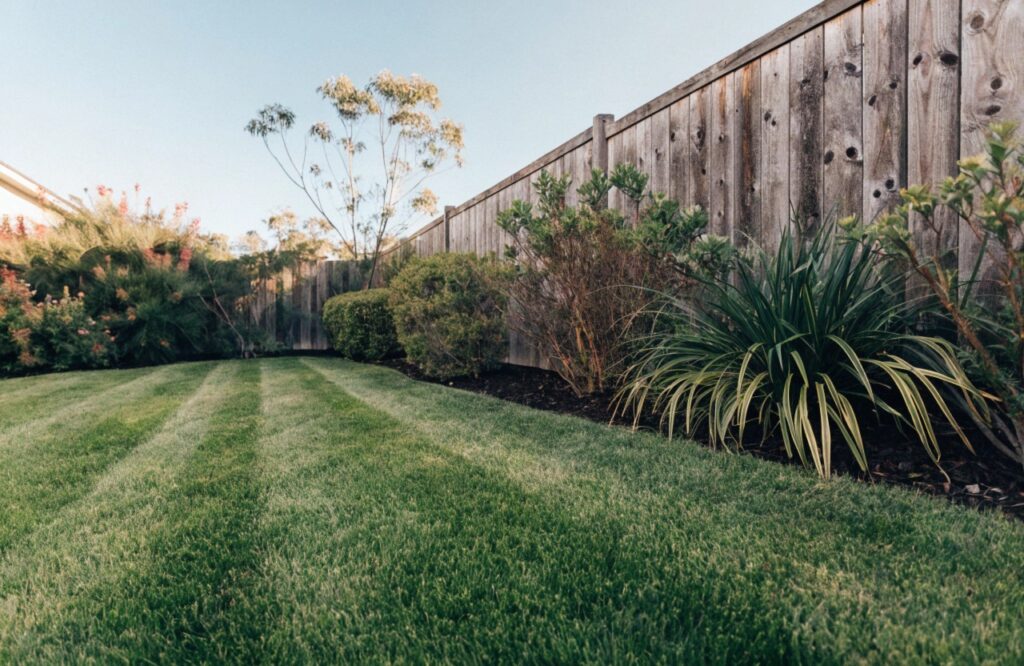
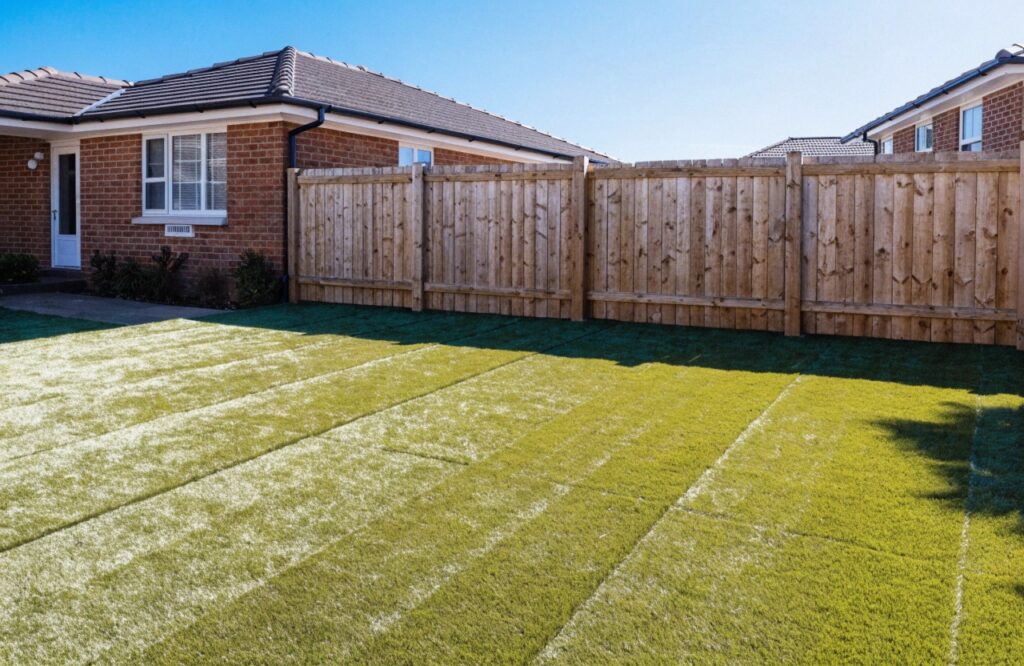
Buffalo lawns in summer generally need mowing every 7 to 10 days. Buffalo grows more upright than couch and handles a slightly taller cut well, which helps it retain moisture and shade out weeds during hot, dry stretches.
Couch lawns grow faster and denser than buffalo through summer and often need mowing every 5 to 7 days to stay on top of it. Couch also tolerates a shorter cut, so more frequent mowing at a lower height keeps it looking tight without stressing the grass. For homeowners deciding between the two varieties for a new lawn, Lawn Solutions Australia’s comparison of couch and buffalo characteristics is a helpful reference for understanding these growth-rate differences in more depth.
Skipping a mow during peak summer growth, even by a few extra days, can mean removing significantly more leaf blade than is healthy in a single cut, which stresses the lawn and can leave clippings too thick to break down naturally.
Winter Mowing: What Changes and Why
Through the cooler months, both buffalo and couch lawns slow down considerably. Growth isn’t fully dormant in Lake Macquarie’s milder winters, but it’s slow enough that weekly mowing becomes unnecessary and, in most cases, counterproductive.
A fortnightly mow, roughly every 14 days, is typically sufficient for both turf types through winter. Mowing too frequently during this period can scalp a lawn that’s already growing slowly, weakening it heading into spring.
It’s also worth raising the mower height slightly in winter. A taller cut protects the crown of the grass through cooler nights and helps the lawn bounce back faster once growth picks up again in spring.
Signs Your Lawn Needs Mowing Sooner Than Scheduled
A fixed schedule is a useful starting point, but the lawn itself is the more reliable signal. A few indicators suggest mowing is due, regardless of what the calendar says:
- The grass has grown enough that more than a third of the blade length would need to be removed in the next cut
- The lawn looks uneven or “shaggy” in patches, particularly around edges and garden beds where growth is often faster
- Seed heads have started to appear, especially common in couch during warm, humid stretches
- The lawn feels noticeably softer or spongier underfoot than usual, which can indicate excess growth trapping moisture at the base
Waiting until a lawn is visibly overgrown before mowing tends to create more work, not less. Removing too much leaf blade in one cut stresses the grass and can open the door to the weed and disease pressure common in humid Hunter Region summers.
Coastal vs Inland Properties: Does Location Affect Growth Rate
Lake Macquarie’s mix of coastal and inland suburbs means growing conditions aren’t uniform across the region. Coastal properties tend to have sandier, faster-draining soil, which affects how nutrients and moisture are retained around the root zone. Inland properties, often on heavier clay-based soils, retain moisture for longer, which can support more consistent growth during dry spells but also increases the risk of fungal issues after heavy rain.
Salt-laden coastal air can also affect certain turf varieties more than others, which is part of why buffalo, generally more salt-tolerant than couch, is a common choice in properties closer to the water.
None of this means coastal and inland lawns need dramatically different mowing schedules, but it does mean two neighbouring suburbs with different soil profiles might see a few days’ difference in how quickly a lawn needs its next cut. Paying attention to the lawn’s actual condition, rather than assuming every property in Lake Macquarie behaves identically, gives a more accurate mowing rhythm.
Setting Up a Mowing Schedule That Actually Works
The most effective mowing schedule isn’t a single number applied year-round. It’s a seasonal baseline, adjusted for the signs the lawn itself is showing.
A practical approach looks like this:
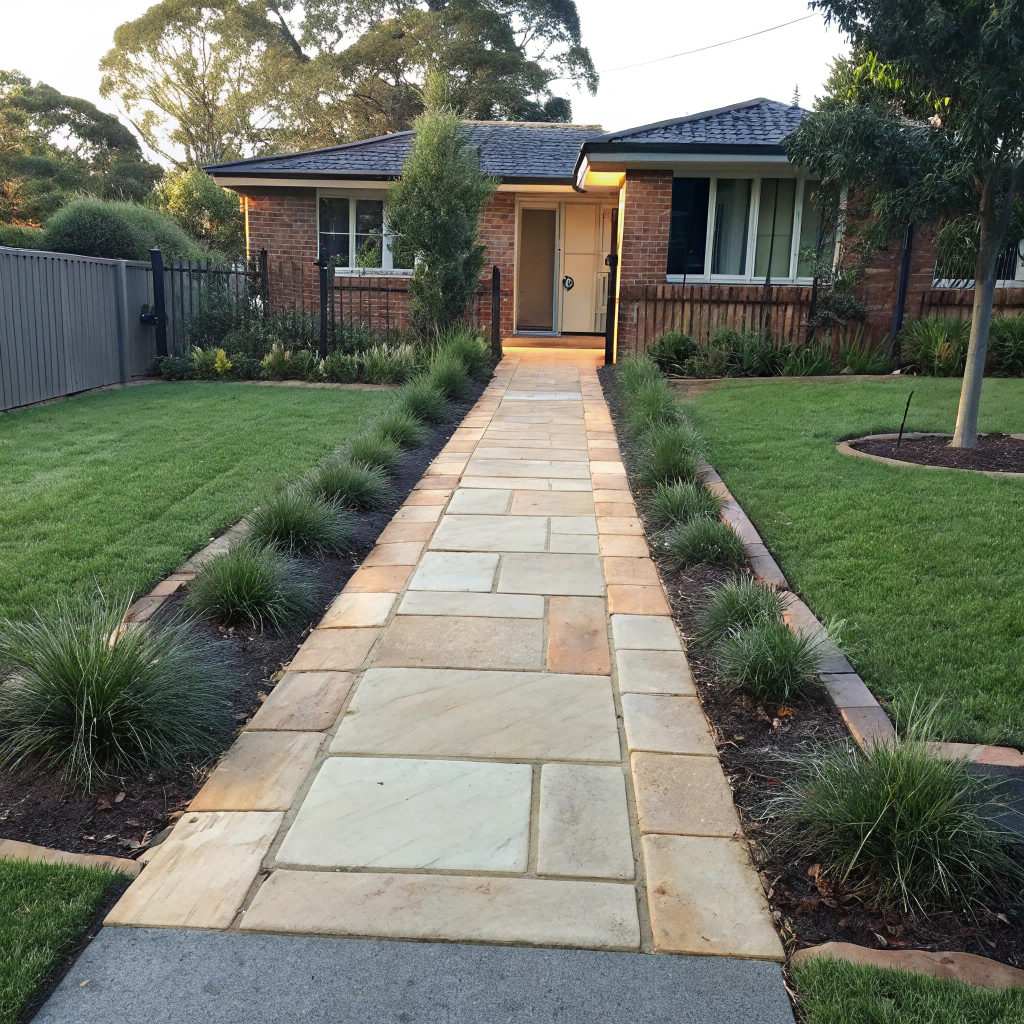
- Set a seasonal baseline — weekly for buffalo and couch through summer, fortnightly through winter, with spring and autumn typically falling somewhere in between depending on conditions.
- Check rainfall and recent weather before assuming the baseline still applies, particularly after an unusually wet or dry stretch.
- Look at the lawn, not just the calendar, using the signs above as a quick gut check before deciding to delay a mow.
- Adjust mower height seasonally, slightly higher in winter and during dry summer stretches, to protect the grass and reduce stress between cuts.
For homeowners who’d rather not track all of this themselves, a scheduled mowing service that adjusts frequency to the season and current conditions removes the guesswork entirely, and keeps the lawn consistent without it becoming another thing to manage on an already full weekend.
If you’d rather hand mowing frequency over to someone who already tracks all of this, Landscaping Newcastle offers scheduled lawn mowing and maintenance packages across Lake Macquarie and the wider Newcastle area, adjusted seasonally so the lawn stays consistent without you having to think about it.
Landscaping Newcastle
Apt 17-303 Turton Rd, New Lambton NSW 2305
Phone: (02) 4058 1214
Website: landscapingnewcastle.net.au


Comments (0)