
Mulch plays a bigger role in Port Stephens gardens than most homeowners realise. With sandy…
How Often Should You Mow Your Lawn in Port Stephens?
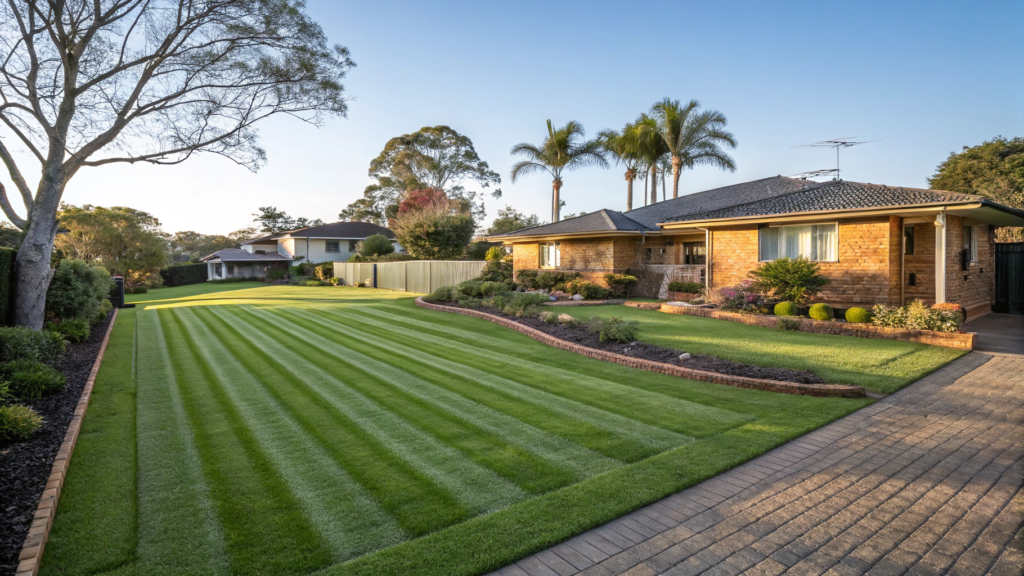
Mowing frequency is one of the most common questions Port Stephens homeowners ask once the weather starts to warm up. The right answer depends on the season, your grass type, and how much rain the region has had recently — not a fixed weekly rule that applies all year round.
Port Stephens’ warm temperate climate means growth rates shift significantly between seasons. A mowing schedule that keeps your lawn looking sharp in December can leave it patchy and stressed by July, while the same frequency in winter can mean mowing a lawn that barely needs it. Getting this balance right protects the health of the grass, reduces weed pressure, and keeps your yard looking consistently tidy without unnecessary effort.
This guide breaks down how often to mow through each season on the NSW coast, what to adjust for Buffalo versus Couch lawns, and the practical signs that tell you when your current routine needs a change. By the end, you’ll have a clear, season-by-season mowing benchmark you can apply straight away.
Quick answer: In Port Stephens, most lawns need mowing weekly during spring and summer (roughly September to March) when growth is fastest, and every two to three weeks during autumn and winter as growth slows. Buffalo lawns generally need slightly less frequent mowing than Couch, which grows faster and tolerates lower cutting heights.
Why Mowing Frequency Changes Through the Year
Grass growth is driven by temperature, daylight hours, and moisture — and all three shift noticeably across a Port Stephens year. Warmer soil temperatures speed up root and leaf growth, longer daylight hours extend the time grass has to photosynthesise, and consistent rainfall or irrigation keeps growth active rather than stressed.
When any of these three factors increase, grass puts out more leaf growth and needs cutting more often to stay at a healthy, even height. When they drop away in cooler months, growth slows, and the same mowing frequency becomes unnecessary — and can even damage the lawn by cutting too much leaf material off a slower-growing plant.
This is why a single “mow once a week” rule doesn’t hold up across the full year in this region. The better approach is to think in terms of leaf growth rather than the calendar: mow often enough that you’re never removing more than around a third of the leaf blade in one cut, and let the season dictate how often that point is reached.
Spring and Summer Mowing in Coastal Climates
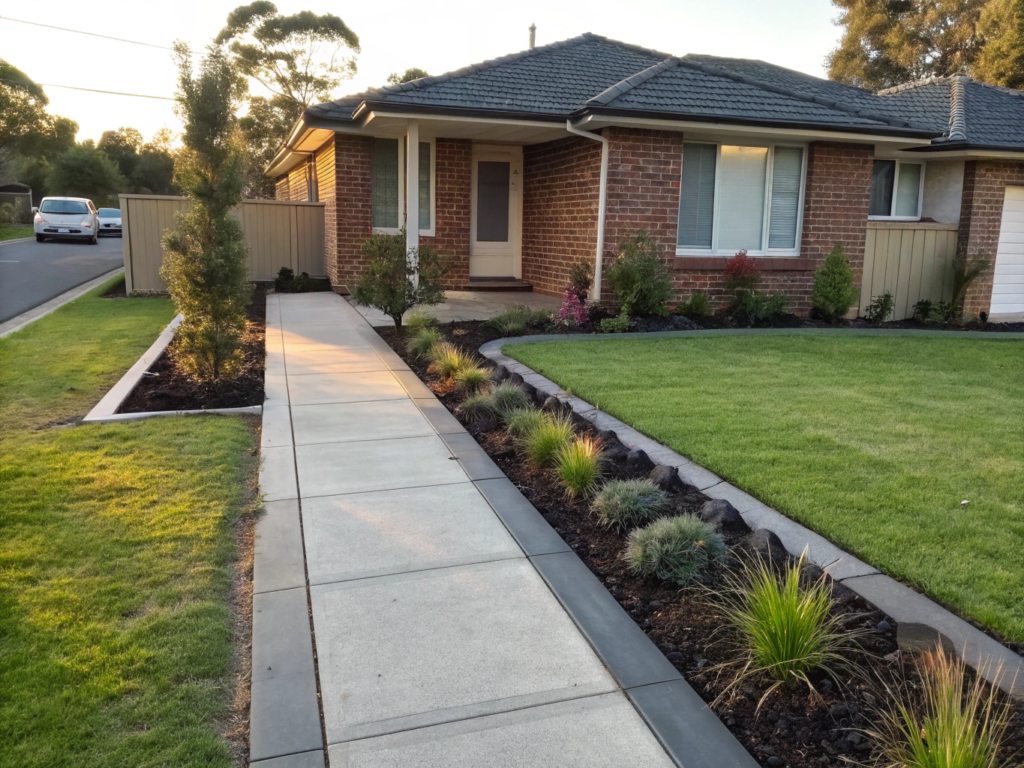
Spring through summer is the peak growth window for lawns across the Port Stephens area. Warm days, humidity, and regular rain events common to the NSW coast create ideal growing conditions, and most lawns will need mowing weekly during this period to keep pace.
Coastal humidity also plays a role beyond growth rate. Longer grass held in humid, still air is more prone to fungal issues, so keeping mowing consistent through summer isn’t just about appearance — it helps reduce the conditions that lawn disease needs to take hold.
During particularly wet stretches, growth can outpace even a weekly schedule. If the lawn is visibly getting away between mows, shifting to a more frequent cut for a few weeks — rather than waiting and taking off a large amount in one go — keeps the lawn healthier and avoids leaving heavy clippings behind that can smother the grass underneath.
Autumn and Winter Mowing Adjustments
As temperatures drop through autumn and into winter, growth slows considerably and mowing frequency should stretch out with it — typically to every two to three weeks, and sometimes longer during cooler snaps.
The main risk in this period isn’t under-mowing, it’s over-mowing. Cutting a slow-growing lawn too short or too often in winter removes leaf material the plant needs to photosynthesise during a period when it’s already under more stress from cooler soil and shorter days. This can leave the lawn thin and more vulnerable to winter weeds moving into bare patches.
It’s also worth raising the mower height slightly through the cooler months. A taller cut helps the grass retain more energy reserves and shade out emerging weeds, which is particularly useful heading into the weedier stretches of late winter and early spring.
Signs Your Lawn Is Being Mowed Too Little or Too Much
A few practical signs make it easy to tell if the current mowing schedule needs adjusting, without needing to guess:
- Scalping or brown patches after mowing — usually a sign the lawn was left too long between cuts and too much leaf was removed in one pass
- Visible grass seed heads or an uneven, shaggy appearance — a sign mowing frequency hasn’t kept up with current growth rate
- Thinning turf or bare patches — can indicate the lawn is being cut too short or too often for the season.
- Increased weed presence, particularly bindii or clover — thin, stressed turf from incorrect mowing frequency gives weeds room to establish
- Clumping clippings left on the surface — a sign too much growth was removed at once, usually because mowing was skipped for too long
If any of these signs are showing up regularly, it’s less about a single bad mow and more a sign the overall frequency needs to shift with the season.
How Buffalo and Couch Respond to Mowing Frequency
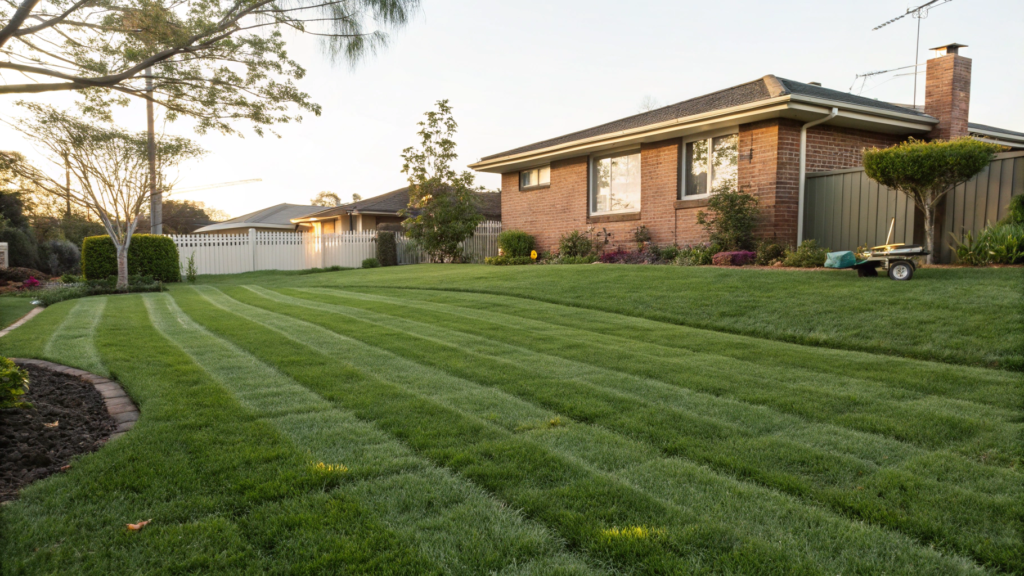
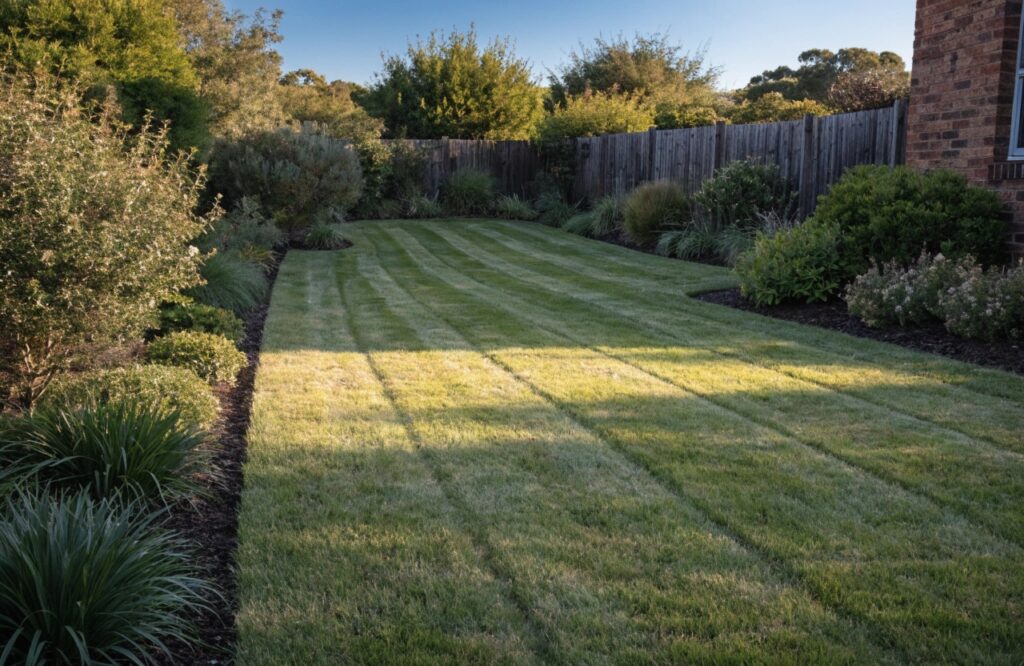
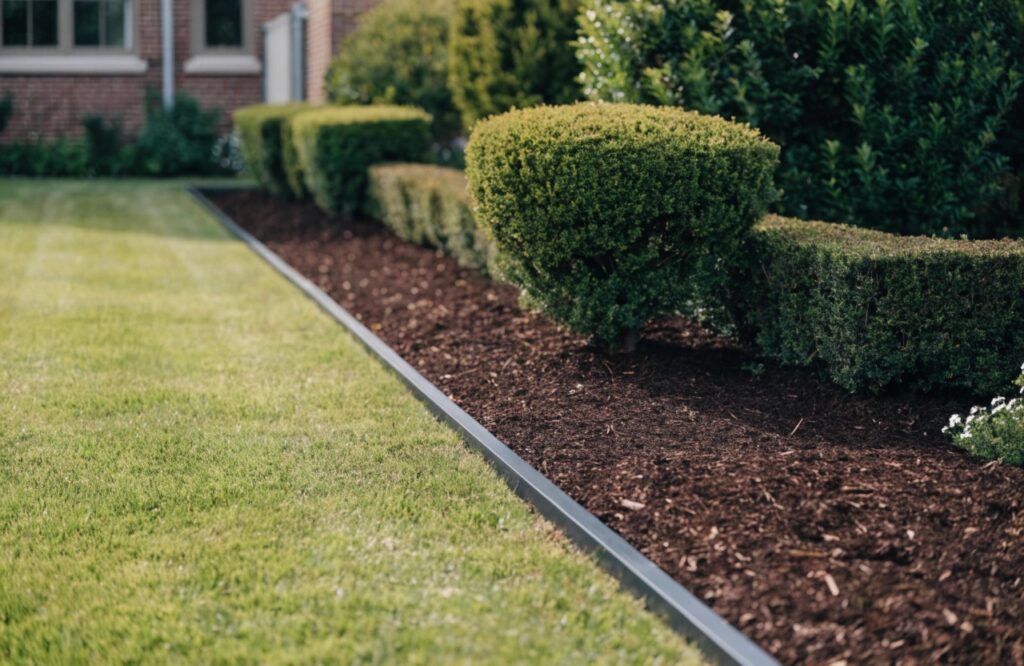
Buffalo and Couch are the two most common lawn types across Port Stephens properties, and they respond differently to mowing frequency and height.
Buffalo lawns are generally mowed slightly less often than Couch and prefer a higher cutting height. Buffalo has a broader leaf blade and a growth habit that doesn’t tolerate being cut too short — scalping a Buffalo lawn can expose the runners and leave it vulnerable to weed invasion and heat stress through summer.
Couch lawns grow faster and tolerate a shorter, more frequent cut. Couch is more forgiving of tighter mowing schedules and can handle being cut lower without the same risk of scalping, which is part of why it’s often chosen for areas that get harder wear.
Because these two grass types respond differently, a mowing frequency that suits a Couch lawn can be too aggressive for Buffalo, and vice versa. If you’re not sure which grass type you have, checking leaf width and growth habit against guidance from a body like Turf Australia can help confirm it before adjusting your routine.
Rainfall patterns tracked by the Bureau of Meteorology also give a useful reference point for how much growth to expect through the year in the Hunter and Port Stephens region, particularly in years with above-average spring or summer rainfall where mowing frequency may need to increase temporarily regardless of season.
Keeping on top of a changing mowing schedule through the year isn’t always practical alongside everything else on a weekend. If you’d rather have a reliable routine handled for you — one that adjusts with the season automatically — Landscaping Newcastle can set up a regular mowing and maintenance package for your Port Stephens property.
Call 02 4058 1214 or visit landscapingnewcastle.net.au to get a quote.
Landscaping Newcastle — Apt 17-303 Turton Rd, New Lambton NSW 2305


Comments (0)