
The Right Solution for Your Specific Situation
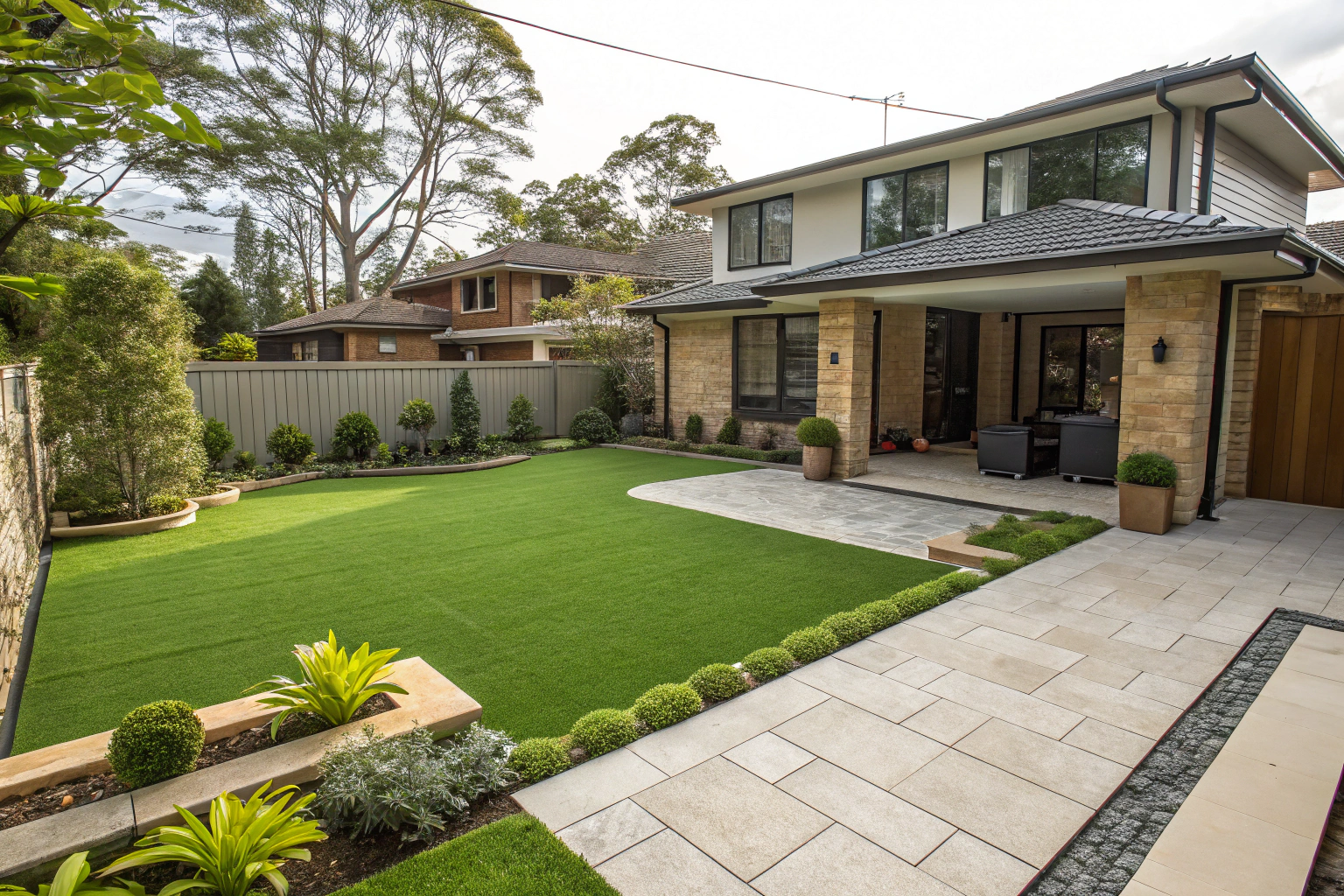
Artificial turf isn’t the right answer for every yard, and we’re not going to tell you it is. Large open lawn areas with good sun exposure, decent soil, and reasonable drainage are still better served by natural turf — it performs well in those conditions, it’s cost-effective to establish, and it looks and feels the way a lawn should. If that’s your situation, we’ll say so.
What we do is look at your specific property, understand what you’re actually trying to solve, and recommend the approach that makes the most sense — whether that’s artificial turf, natural turf, or a combination of both across different areas of the yard. A lot of Newcastle properties end up with exactly that split: natural turf on the main lawn area where conditions suit it, artificial turf in the side passage, under the deck, or in the dog run, where natural grass has never worked and never will.
The goal is a result you’re happy with long-term — not a sale.

Where Artificial Turf Works Best in Newcastle
Natural turf is great — when the conditions suit it. But Newcastle throws up a lot of situations where the conditions don’t suit it at all. The city’s humid summers create ideal conditions for lawn disease and weed pressure. The older housing stock in inner suburbs comes with narrow side passages and courtyard spaces that see maybe two hours of direct sunlight on a good day. Plenty of backyards have a dog that’s already won the war against the lawn, or a patch of compacted clay near the back fence that’s never grown anything in living memory. And then there’s the simple reality that a lot of Newcastle homeowners are time-poor — they’re not looking for another maintenance task to manage through summer. In all of these situations, artificial turf isn’t a compromise. It’s the right call. These are the specific applications where we see it consistently outperform natural lawn.
✅ Shaded courtyards and side passages where sunlight doesn’t reach and natural turf refuses to establish
✅ Small urban backyards in inner Newcastle suburbs like Islington, Carrington, and Wickham where the lawn area is too limited to justify ongoing natural turf maintenance
✅ Pet areas and dog runs where digging, high traffic, and wet weather have destroyed natural lawn repeatedly
✅ Children’s play areas where a soft, consistent, year-round green surface is more practical than patchy seasonal grass
✅ Rooftop terraces and balconies where natural turf installation simply isn’t feasible
✅ Commercial and retail properties that need a well-maintained green surface without the ongoing cost of grounds maintenance
✅ Water-restricted properties where keeping natural lawn alive through a dry Hunter summer is a constant battle
If your situation doesn’t fit this list, we’ll tell you that too. Large open areas with good sun exposure and decent soil conditions are still better served by natural turf — and we’d rather give you honest advice than sell you something that isn’t the right fit.
The Specs That Actually Determine How Natural Your Lawn Looks
Most people pick artificial turf based on how it feels underfoot in a showroom. That’s a reasonable starting point, but it’s not the whole picture. The specifications that actually determine how convincing the finished result looks — and how well it holds up over time — come down to four things: pile height, blade shape, density, and the inclusion of a thatch layer at the base.
Pile height affects how the lawn reads from a distance and how it behaves underfoot — too short, and it looks commercial, too long, and it flattens easily under traffic. Blade shape determines how light catches the surface. Flat blades look uniform and artificial. C-shaped and S-shaped blades move more like real grass and create the kind of natural variation that makes a synthetic lawn actually convincing.
Density affects both appearance and durability — higher stitch rates produce a fuller surface that holds its shape longer. The thatch layer is the detail most people overlook. That base layer of brown and tan fibres mimics the dead matter sitting at the base of a real lawn, and it’s the difference between a result that looks genuine up close and one that clearly doesn’t.
Drainage Capacity — Getting the Specification Right for Newcastle’s Rainfall
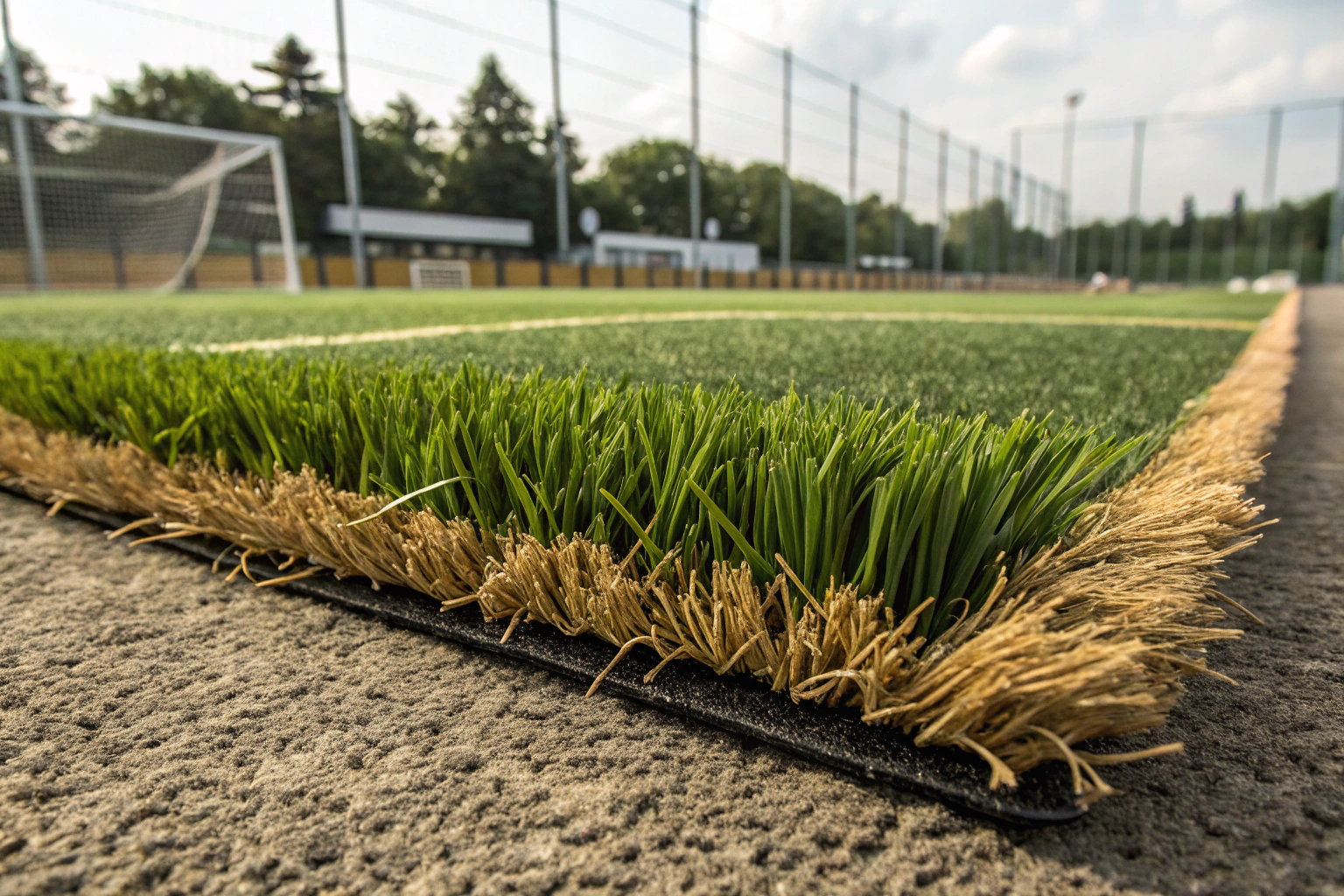
Newcastle gets meaningful rainfall, particularly through summer and autumn — and that water needs somewhere to go quickly. Pooling on the surface after rain is one of the more common complaints from homeowners who’ve gone with a cheaper product that wasn’t specified correctly for the conditions. Drainage capacity is measured in litres per square metre per hour, and for a Newcastle installation, it’s not a spec you want to cut corners on.
- Drainage capacity should be specified to handle Newcastle’s heaviest rainfall event.s
- Cheaper products with low drainage rates pool water and stay wet long after the rain clears
- A correctly specified product drains quickly and returns to a usable, dry surface fast.
Quality artificial turf products designed for Australian conditions typically drain at rates well above what even a heavy Hunter downpour can throw at them. The drainage performance comes from a combination of the turf backing itself and the compacted aggregate base beneath it — both need to be right. Get either one wrong,g and you end up with a surface that sits wet, softens underfoot, and starts to smell in warm weather.
Aesthetic Integration Done Right
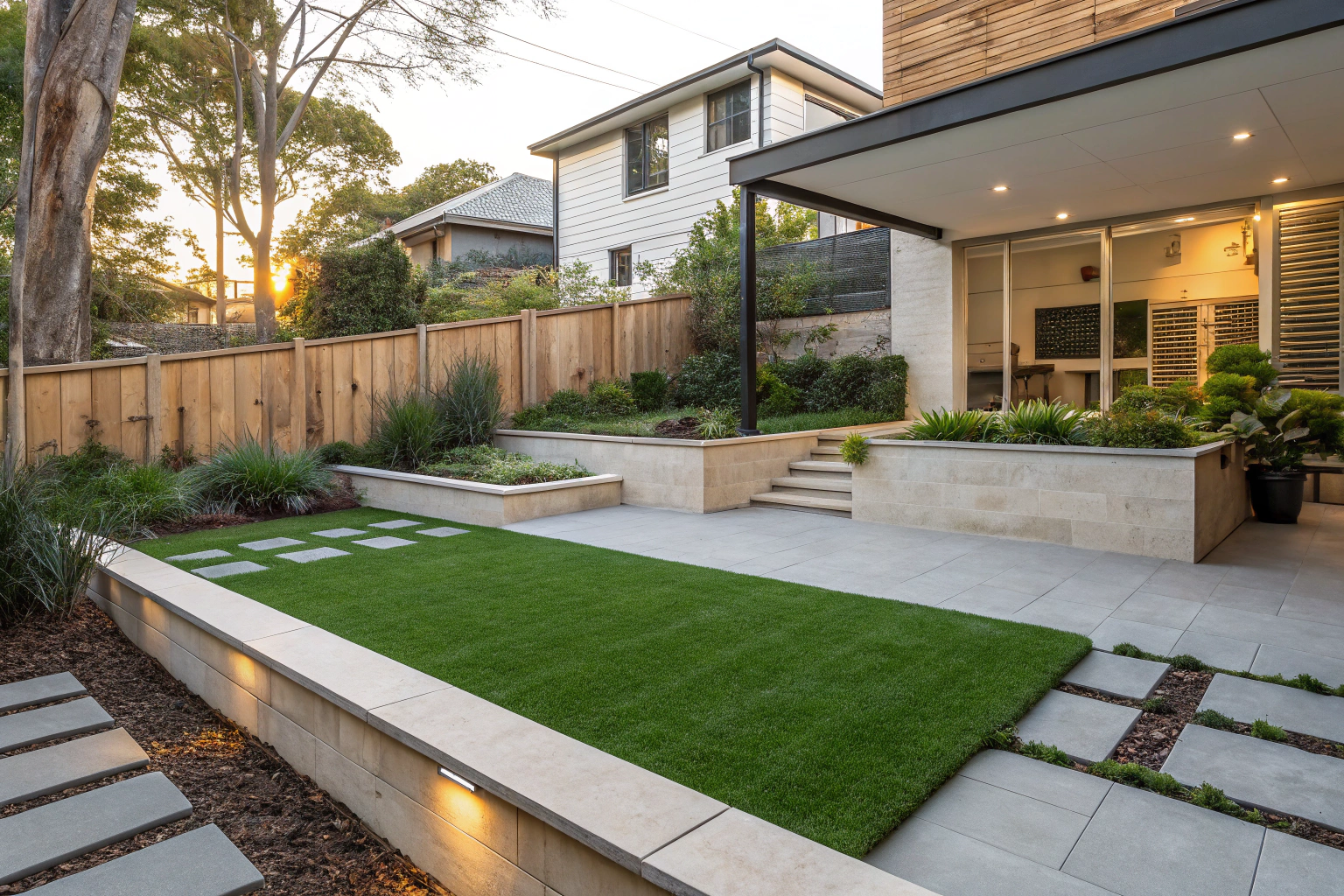
Modern artificial turf looks nothing like the bright green carpet that gave synthetic lawn a bad reputation twenty years ago. The product quality available today — with varied blade shapes, natural colour variation, and thatch layers built into the base — produces a result that reads as genuine grass from any normal viewing distance, and holds up to closer inspection far better than most people expect.
The integration piece is where professional installation earns its keep. A well-installed artificial lawn sits flush with surrounding paving, garden beds, and edging. Joins are cut and seam properly so they disappear into the surface. Edges are secured cleanly against borders and paths. The finished result doesn’t look like turf that’s been laid on top of a space — it looks like it belongs there.
For Newcastle properties where the outdoor area connects directly to entertaining space, getting that integration right makes a genuine difference to how the whole yard feels and presents.
Pet-Friendly Artificial Turf — Why the Product Choice Matters for Dog Areas
For households with dogs, standard artificial turf products aren’t always the right fit. The problem isn’t the turf itself — it’s the infill. Standard silica sand infill isn’t designed to manage the bacterial activity that builds up in a dog area over time, and in Newcastle’s hot summers, when the surface heats up, and organic matter breaks down faster, a poorly specified product can become genuinely unpleasant to be around.
Pet-specific artificial turf is manufactured with antimicrobial infill — a treated silica sand or crumb rubber mix that inhibits the bacterial growth responsible for odour. It makes a real difference in practice, particularly in enclosed areas like side passages and dog runs where airflow is limite,d and the surface takes consistent heavy use. If you’ve got dogs, it’s worth having that conversation at the product selection stage rather than trying to manage the problem after the installation is already down. Getting the specification right upfront costs nothing extra — getting it wrong costs plenty.
Low Maintenance Doesn’t Mean No Maintenance
Artificial turf eliminates the regular tasks that take up most of the time spent on a natural lawn — no mowing, no watering, no fertilising, no pest or disease management. For most Newcastle homeowners, that’s the entire point, and on that front it genuinely delivers. But it’s worth being straight about the fact that artificial turf isn’t entirely maintenance-free.
High-traffic areas will flatten over time without occasional brushing to keep the pile upright. Leaf litter and organic debris accumulate on the surface and need to be cleared periodically — particularly in yards with established trees overhead. Pet areas need rinsing regularly to manage odour, especially through summer when the surface heats up and breaks down organic matter faster. In high-wear zones like dog runs and play areas, infill material gradually displaces and needs topping up every few years to keep the surface performing and feeling right underfoot.
The overall maintenance commitment is dramatically lower than natural lawn. But going in with accurate expectations means you’ll manage the surface properly and get the full lifespan out of the product.
Frequently Asked Questions About Artificial Turf Installation in Newcastle
A quality UV-stabilised product installed correctly will last fifteen years or more in Newcastle’s conditions. Cheaper products without proper UV stabilisation fade and degrade significantly faster — product quality at the selection stage directly determines the lifespan of the finished installation.
Cost varies depending on area size, site conditions, and product selection. Base preparation, product supply, and installation are all factored into the quote. The best way to get an accurate figure is to measure and quote on your specific space.
Yes — artificial turf can be installed directly over concrete and paved surfaces with appropriate adhesive and edge securing. Drainage needs to be considered carefully in this application, as water can only exit through existing drainage points rather than through a prepared aggregate base.
Quality artificial turf products are manufactured to meet Australian safety standards and are a common choice for children’s play areas. Products with appropriate pile height and infill provide a soft, consistent surface that holds up to heavy use year-round without the bare patches natural lawn develops.
Rinse the area regularly with water to dilute and flush away urine. Solid waste should be removed promptly. Pet-specific products with antimicrobial infill manage odour significantly better than standard products — if you have dogs, the product specification at installation stage makes a real difference.


Get a Measure and Quote for Artificial Turf Installation in Newcastle
If you’ve got a space that’s giving you trouble — a shaded side passage, a dog run that’s beyond saving, a small backyard that’s more work than it’s worth — artificial turf is worth a proper look. We install across Newcastle and the Hunter Region, and we’ll give you honest advice on whether it’s the right solution for your specific situation before any commitment is made.
Get in touch to arrange a measure and quote. We’ll come out, assess the space, talk through product options that suit the conditions and your budget, and give you a clear price on the full installation — base preparation, product supply, and finished surface included. No surprises on the day and no pressure to proceed if it’s not the right fit.
Call us today or fill out the contact form below to book your measure and quote for artificial turf installation in Newcastle.
