
What Is Sustainable Landscaping?
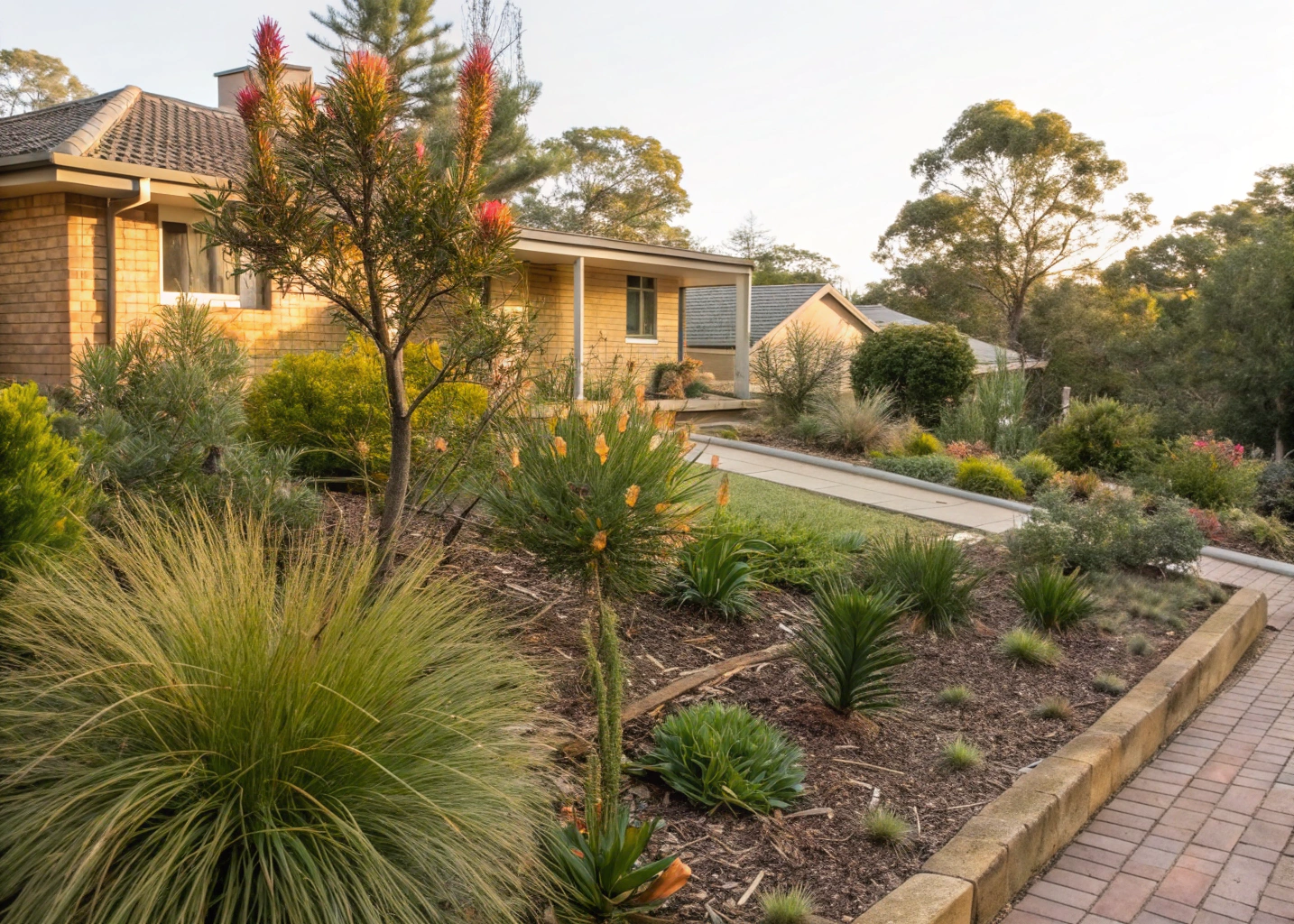
Sustainable landscaping is a design approach that creates outdoor spaces working with natural systems rather than against them — covering water conservation, soil health, native planting, material selection, and long-term ecological performance.
Core principles:
- Native and locally indigenous planting — species selected for resilience and ecological fit in the local environment
- Water conservation and rainwater harvesting — reducing mains water dependency through smart capture and efficient delivery
- Soil health through composting and organic mulch — building living soil rather than relying on synthetic fertilisers
- Permeable surfaces and stormwater management — allowing rainfall to soak in rather than run off into drains
- Sustainable material selection — recycled, reclaimed, and locally sourced hard landscaping materials
- Reduced lawn and chemical inputs — cutting maintenance demand and eliminating pesticide and herbicide use
For Newcastle properties specifically, sustainable landscaping connects directly to the health of the Hunter Region’s coastal waterways, remnant bushland corridors, and the urban wildlife that depends on them.

What Sustainable Landscaping Actually Means for Your Newcastle Garden
Sustainable landscaping isn’t just about planting natives or cutting out chemicals — that’s the most common misconception we come across. It’s a whole-of-garden design approach covering six areas that all affect each other: water use, soil health, biodiversity, material selection, waste generation, and long-term maintenance requirements. Get one of those areas right while ignoring the others and the garden still underperforms.
When all six are designed together, the garden behaves differently. It stabilises. It establishes. It gets better over time rather than needing more work to hold a baseline.
For Newcastle homeowners, that scope of thinking is particularly relevant. The city sits alongside a coastal ecology with real urban wildlife, genuine bushland corridors, and waterways worth protecting. Designing outdoor spaces that actually work with those systems — rather than producing a high-maintenance version of a generic suburban garden — is both achievable and increasingly what our clients are asking for.
Key Sustainable Landscaping Principles at a Glance
- Locally indigenous plant selection matched to site conditions
- Rainwater harvesting integrated with efficient drip irrigation
- Living soil built through composting and organic mulch
- Permeable surfaces managing stormwater on site
- Recycled and locally sourced hard landscaping materials
- Chemical-free pest and weed management through design
The Ecological Value of Provenance Planting
Local birds, insects, reptiles, and native bees have co-evolved with locally indigenous plant species over thousands of years. Those relationships are specific — a particular honeyeater foraging on a particular flowering shrub, a native bee dependent on a specific groundcover for nesting material, a blue-tongue lizard sheltering under a particular dense shrub. Plants sourced from other regions can’t replicate those relationships, no matter how well they grow.
Newcastle’s urban wildlife is genuinely remarkable. Powerful owls, eastern rosellas, varied honeyeaters, blue-tongue lizards, and multiple native bee species are all present in established suburban gardens across the city. A locally indigenous planting scheme actively supports those populations in ways that even well-intentioned conventional planting simply cannot match.
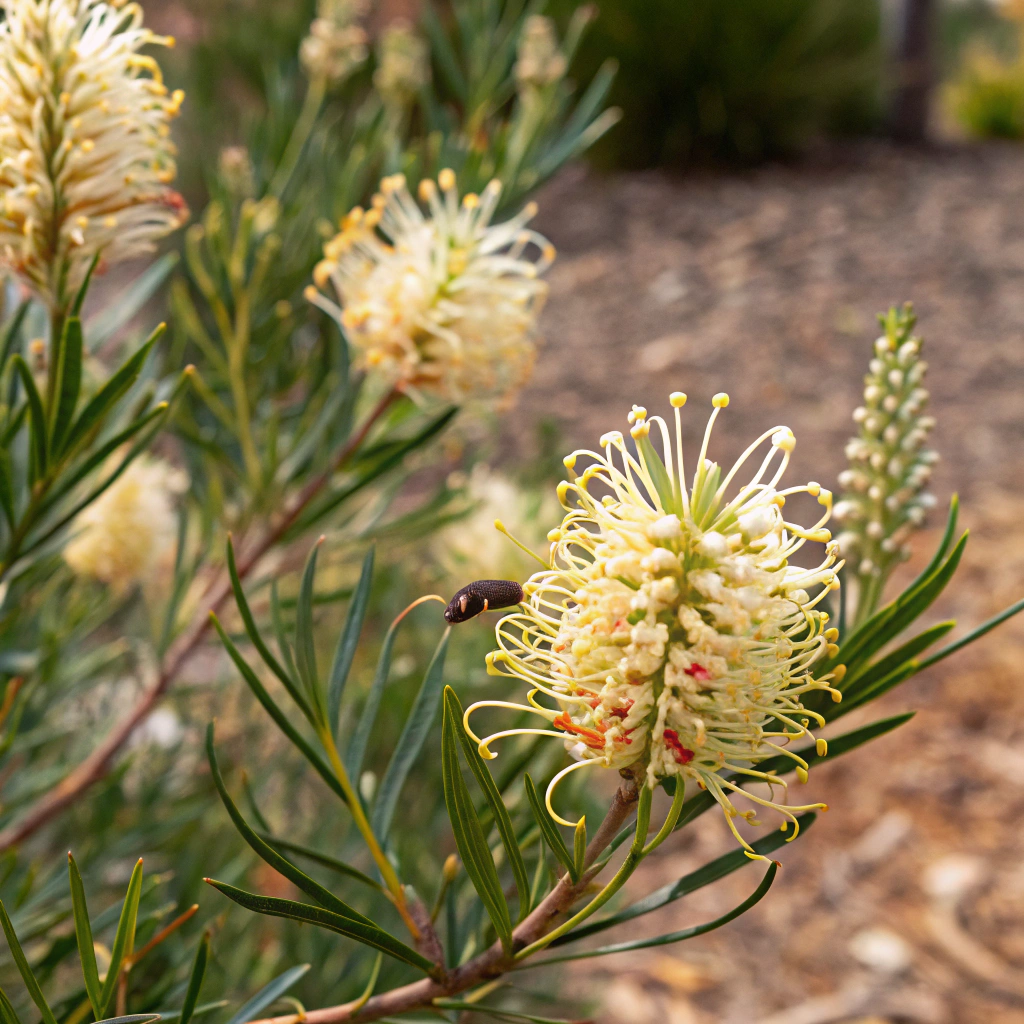
Aesthetic Possibilities Within the Local Native Palette
The idea that native gardens are scrubby, brown, or visually uninteresting is one of the most persistent myths in residential landscaping — and one of the most inaccurate. The Hunter Region’s indigenous plant palette is genuinely diverse. Flowering banksias and grevilleas. Lomandras and native grasses with strong textural presence. Aromatic native mint bushes. Scribbly gums providing canopy structure. Climbing native wisteria delivering seasonal colour.
Choosing locally indigenous plants is not a design compromise. It’s access to a planting palette that most conventional landscapers never explore — one that delivers real year-round visual interest alongside genuine ecological performance. At Landscaping Newcastle Pro, we work with this palette every day. The design possibilities within it are far broader than most Newcastle homeowners realise until they see what’s actually possible for their own block.


Water Conservation Strategies for Newcastle Properties
Water is Newcastle’s most valuable garden resource — and the most wasted one.
Rainwater Harvesting and Tank Systems
Newcastle receives solid annual rainfall — but summer distribution is uneven, hitting exactly when garden water demand peaks. A properly sized tank with a first-flush diverter and drip irrigation integration bridges that gap without touching mains supply at all.
Rain Gardens, Swales and Permeable Surfaces
Rain gardens and swales capture rainfall on site, slow it down, and filter it through soil and plant roots rather than letting it run into stormwater drains. For Newcastle properties that pool and flood during heavy rain, they solve a real problem while protecting local waterways.
Drip Irrigation and Greywater Reuse
Drip irrigation delivers water directly to root zones, cutting the evaporative loss of overhead sprinklers significantly. Combined with a compliant greywater system redirecting laundry and shower water to the garden, mains water dependency drops considerably — with direct and ongoing savings on household water bills.
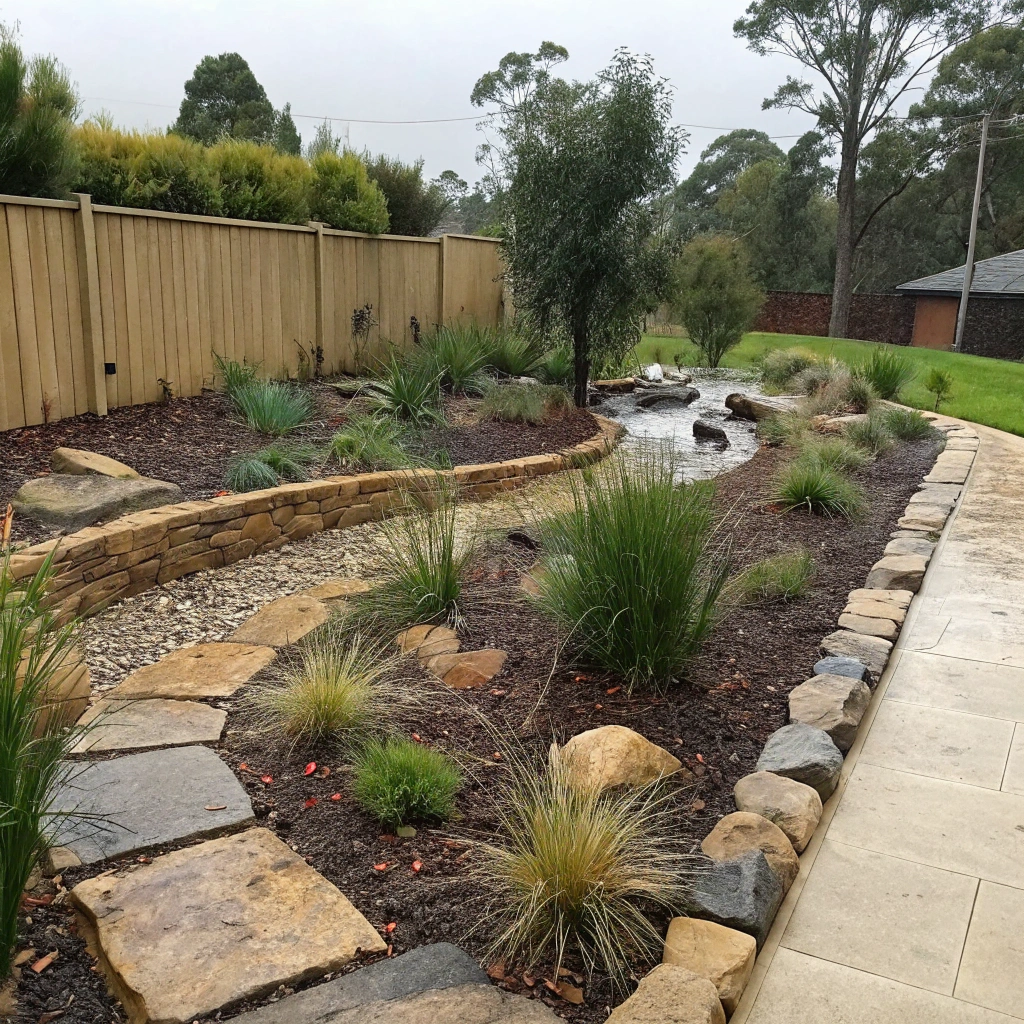
Building Healthy Soil as the Foundation of a Sustainable Garden
Healthy soil isn’t background infrastructure — it’s the active foundation everything else depends on.
Newcastle’s soil conditions vary considerably. Coastal suburbs often have degraded sandy soils with poor water retention. Established areas like Charlestown, Kotara, and New Lambton frequently sit on compacted clay that drains poorly. Neither supports the biologically active soil that sustainable planting needs — which is why soil remediation is always our first step.
Composting introduces organic matter, improves soil structure, and feeds the microbial activity that makes nutrients available to plant roots. Organic mulch retains moisture and breaks down over time to further enrich the soil below. Synthetic fertilisers create dependency while damaging the soil biology they bypass.
Worm farms close the loop — converting kitchen waste into high-quality vermicast that goes straight back into the garden. Plants in healthy soil need less of everything.
Designing for Biodiversity and Local Wildlife Habitat
A well-designed sustainable garden doesn’t just tolerate local wildlife — it actively attracts and supports it.
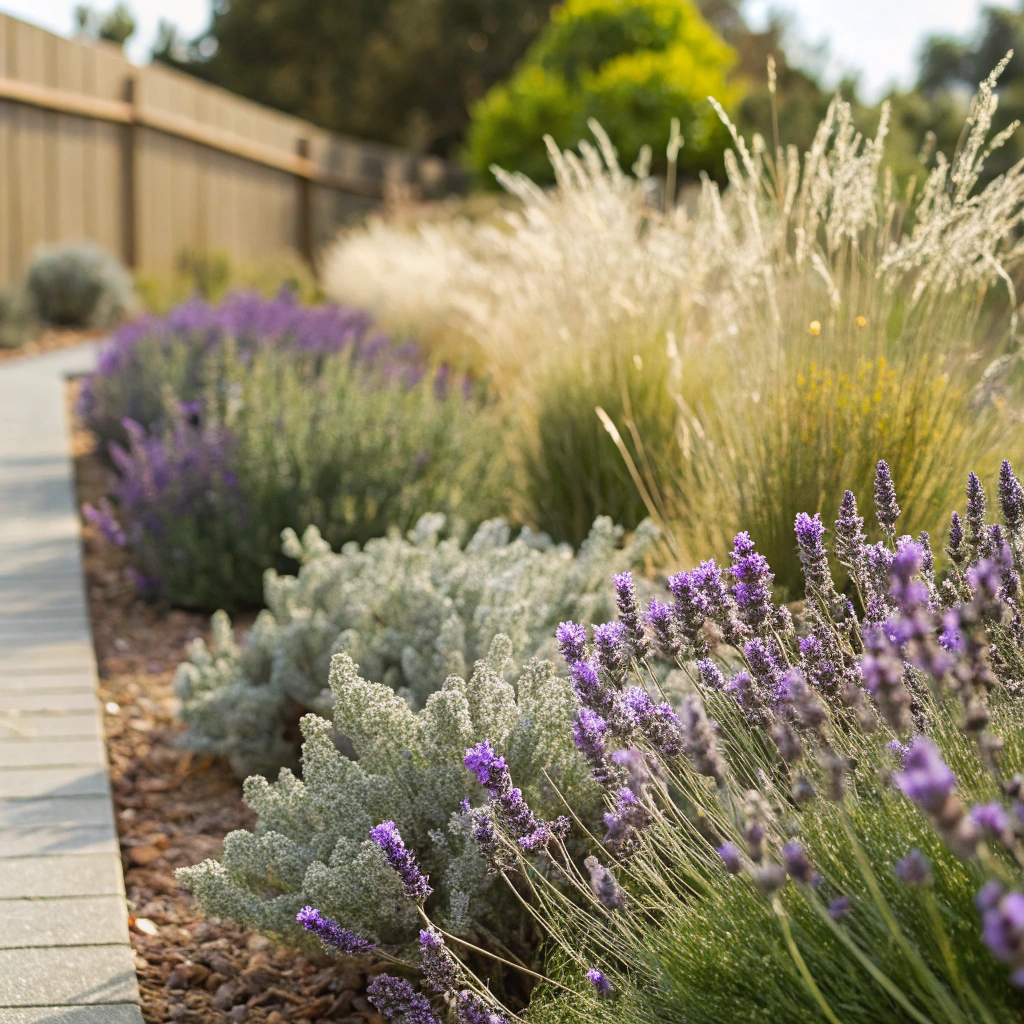
Sustainable Material Selection and Green Waste Management
Material selection carries environmental weight that goes well beyond plant choice.
The embodied energy, durability, and origin of hard landscaping materials directly affects the overall footprint of any project. We favour recycled and reclaimed materials where appropriate — recycled hardwood timber, reclaimed sandstone, and recycled concrete aggregate. These carry a fraction of the embodied energy of virgin equivalents and often deliver superior character and durability.
Treated pine containing harmful preservatives is avoided in favour of naturally durable hardwoods like spotted gum and ironbark. Locally sourced materials are preferred for two reasons — reduced transport emissions and better performance in Hunter Region conditions.
Green waste management follows the same logic. We minimise waste through considered site clearing, chip and compost cleared vegetation on site where practical, and dispose of anything that can’t be reused responsibly. How we work matters as much as what we design.
Long-Term Performance — Why Sustainable Gardens Cost Less to Run
A sustainably designed garden costs significantly less to run over time. That’s not a philosophical position — it’s a financial reality that becomes clearer every season.
Well-chosen locally indigenous plantings become largely self-managing once established. They don’t need feeding programs or ongoing replacement to stay in good shape. Healthy soil supports vigorous growth without synthetic fertiliser inputs. Drip irrigation running on harvested rainwater reduces or eliminates mains water costs. Mulched garden beds suppress weeds without herbicide programs and reduce maintenance visits.
The compounding benefit is what makes sustainable gardens genuinely different. The planting fills out, the soil biology deepens, the wildlife habitat matures. It pays increasing dividends rather than demanding increasing inputs.
For anyone who wants a beautiful outdoor space that doesn’t consume an ever-increasing share of their weekends and budget, this is the most practical answer available.
Frequently Asked Questions
The upfront investment is comparable to a well-designed conventional garden. Where sustainable landscaping differs is in the ongoing costs — which drop significantly over time as the garden establishes, self-manages, and requires fewer inputs to perform.
Most locally indigenous plantings show strong establishment within one to two growing seasons. By year three, a well-designed sustainable garden is largely self-managing and improving in both appearance and ecological value season by season.
We work primarily with locally indigenous species because they produce the best ecological and performance outcomes for Newcastle properties. That said, every design is tailored to the client — we’ll always have an honest conversation about what works best for your specific goals and site conditions.
Absolutely. Some of our most effective sustainable garden designs are on standard suburban blocks across Newcastle. Water-wise planting, efficient irrigation, and good soil preparation work just as well on a small block as they do on a large one.
Regular drainage moves water off your property and into the stormwater system. A rain garden captures that water on site, filters it through soil and plant roots, and allows it to infiltrate naturally — keeping pollutants out of Newcastle’s waterways while solving pooling problems on your property.
A tank makes a significant difference to water independence, but it’s not a prerequisite. We design water conservation into every project through plant selection, mulching, and efficient irrigation — a tank simply takes that further by reducing mains water dependency through dry periods.
It’s one of the best choices for families. A chemical-free garden with no pesticides or herbicides is genuinely safer for children and pets. Native plantings are generally robust, and a well-designed garden creates a genuinely usable outdoor space rather than a high-maintenance one.
Talk to Landscaping Newcastle Pro About Your Garden
A sustainable landscaping consultation isn’t a sales call — it’s a design conversation about what’s possible for your specific property and goals.
We work with Newcastle and Hunter Region homeowners to design outdoor spaces that establish, perform, and improve over time — without the ongoing maintenance burden of a conventional garden. Whether you’re starting from scratch or ready to transform an existing yard, we’d love to talk through what sustainable landscaping could look like for your block.
Call us: 0240581214
Email us: info@landscapingnewcastle.net.au
Service area: Newcastle and the Hunter Region — including Merewether, New Lambton, Charlestown, Kotara, Cardiff, Glendale, Wallsend, Mayfield, Adamstown, and surrounding suburbs.
We respond to all enquiries within one business day.
