
What is the best drainage solution for a waterlogged garden?
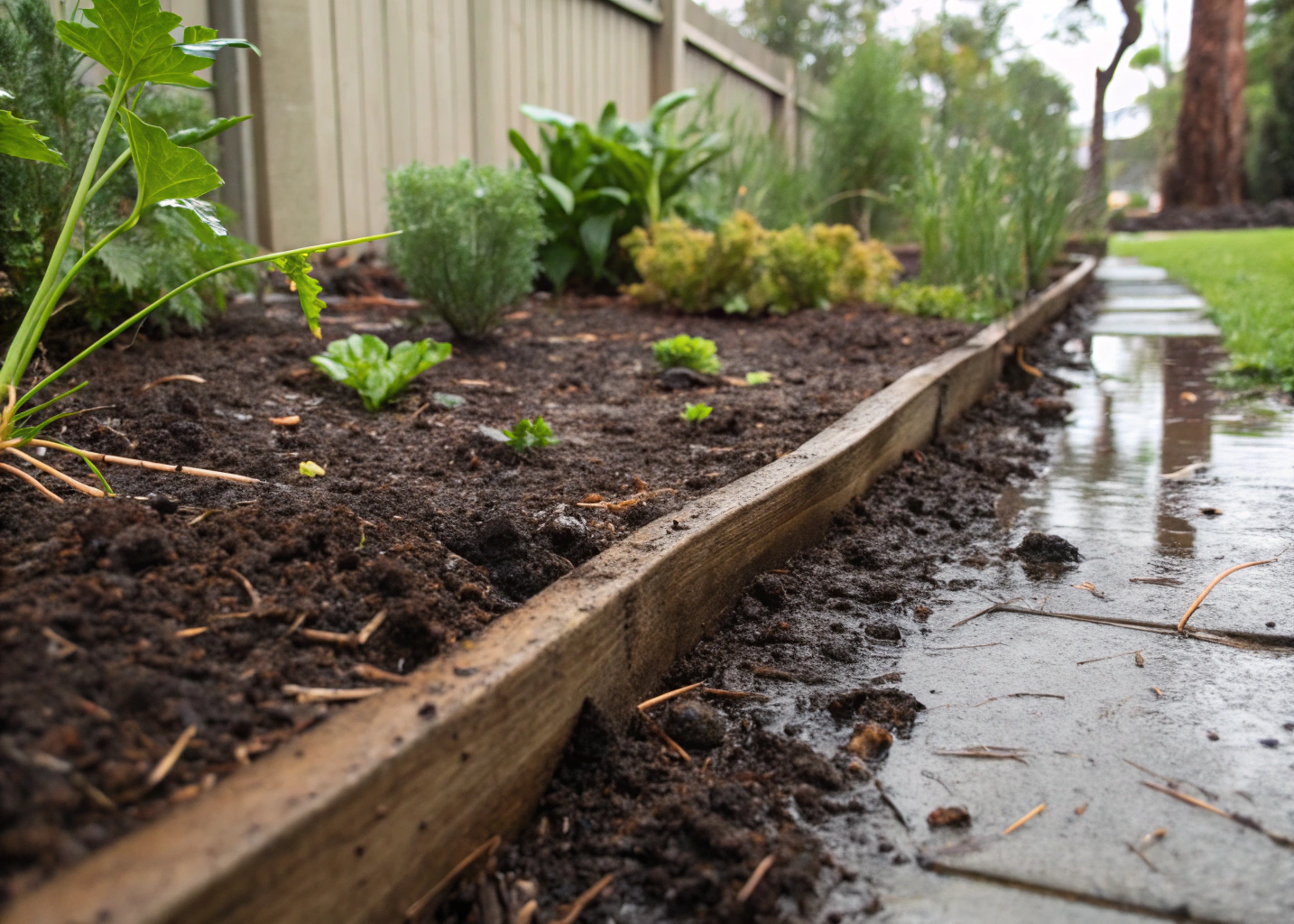
For Newcastle properties, subsurface agricultural pipe drainage is the most effective permanent solution for a waterlogged garden. Newcastle’s clay-heavy soils and the intensity of Hunter Region storms make this a more serious problem here than in many other parts of Australia — surface fixes rarely hold up.
At Landscaping Newcastle Pro, we install a range of drainage systems depending on the problem, the soil, and the site:
- Surface drainage — channels, grated pits, and catch basins that collect and redirect water away from problem areas
- Subsurface agricultural pipe — slotted pipe buried below the surface to draw groundwater away from saturated lawn and garden beds
- Retaining wall drainage — pipe and gravel backfill behind walls to relieve water pressure and protect wall structure
- Rain gardens and bioswales — planted drainage features that capture and slowly release stormwater on site
- Stormwater pit and pipe systems — direct connection to discharge points for high-volume surface water

Why Newcastle Properties Are Prone to Drainage Problems
Newcastle’s drainage problems aren’t bad luck. For a lot of properties across the region, the soil, the land shape, and the weather all work against good water movement. Here’s why it’s such a common issue.
The Drainage Solutions We Design and Install
The right drainage system depends on the specific problem, the soil type, and what’s happening across the whole site. Here’s a look at what we design and install at Landscaping Newcastle Pro.
Surface Drainage: Surface drainage uses channels, grated pits, and catch basins to intercept water at ground level and redirect it away from problem areas. It’s well suited to paved surfaces, driveways, and anywhere surface water concentrates and has nowhere to go.
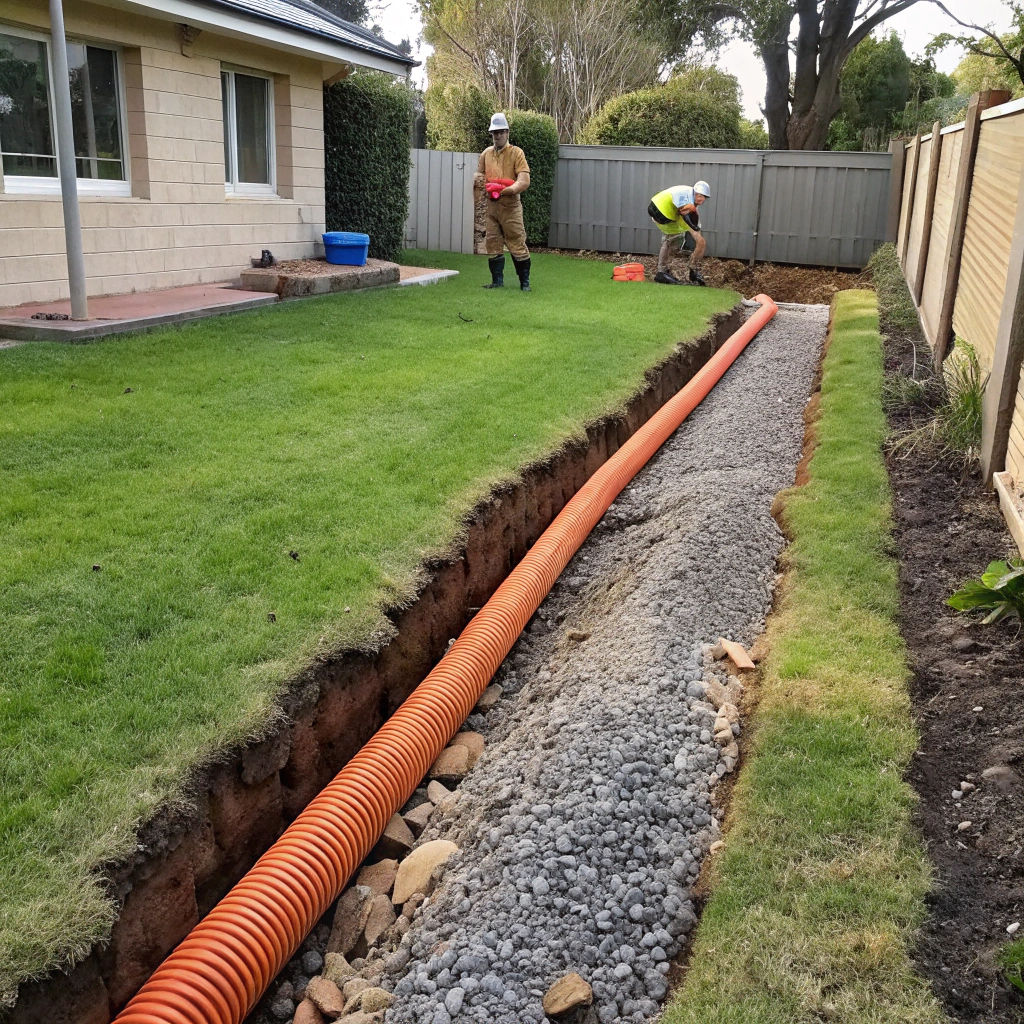
Subsurface Agricultural Pipe Systems: Slotted pipe bedded in gravel, installed below the surface, draws groundwater away from saturated lawn and garden beds and moves it to a discharge point. It’s the most effective long-term fix for properties with persistently waterlogged soil — and it works out of sight once it’s in.
Retaining Wall Drainage: Agricultural pipe and gravel backfill installed behind a retaining wall relieves the water pressure that builds up in saturated soil. It’s one of the most important things you can do to protect a retaining wall long term — and directly addresses the kind of wall damage covered above.
Rain Gardens and Bioswales: Rain gardens and bioswales capture stormwater on site, filter it through planted soil, and release it slowly rather than pushing it offsite all at once. They solve a drainage problem and add genuine landscape value at the same time — a good option for properties where design matters as much as function.
Why a Landscape-Integrated Drainage Design Outperforms a Patch-Up Fix
A lot of Newcastle homeowners have already tried something before they call us. Extra soil built up in low spots. Downpipes redirected to a different part of the yard. A trench dug along the fence line after a particularly bad storm. These things can take the edge off — but they rarely fix the problem, because they deal with where the water ends up, not why it ends up there.
A drainage system that’s designed as part of the landscape looks at the whole site. Where water enters the property. How it moves across different soil types and gradients. Where it needs to discharge. How the drainage integrates with existing paving, lawn areas, and garden beds so the finished result works as one system rather than a collection of separate fixes.
That design step is what separates a permanent solution from an ongoing problem. Without it, you’re managing symptoms. With it, you’re done.


Drainage Considerations for Newcastle’s Most Affected Suburbs
We work across Newcastle and the Hunter Region regularly, and drainage challenges tend to follow predictable patterns depending on where a property sits.
Wallsend, Jesmond, Lambton, and Adamstown come up consistently — clay soil is the core issue, and properties in these suburbs often stay waterlogged well after rain has stopped.
Merewether and Bar Beach present different challenges. Coastal blocks deal with surface runoff that builds quickly during heavy rain, with limited natural absorption and tight block layouts leaving water with nowhere to go.
Further west and south — Fletcher, Glendale, and Cardiff — sloping blocks are the dominant factor. Surface water moves fast on these sites and ends up concentrated against fences, walls, and building edges without a system in place to intercept it.
How We Assess and Design a Drainage Solution for Your Property
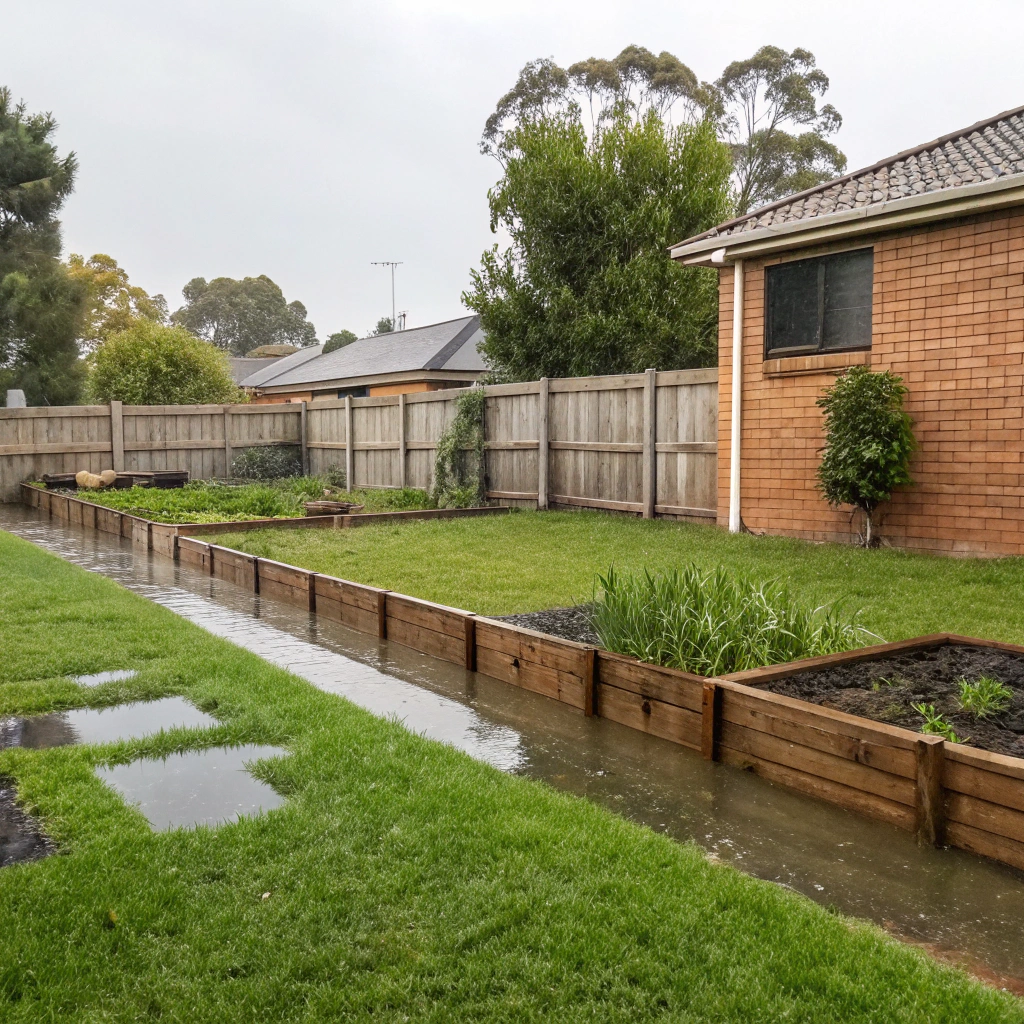
Before anything gets installed, we visit the property and look at what’s actually happening. Where water is entering, where it’s pooling, where it’s tracking, and what the soil and block gradient are doing to move it — or stop it from moving.
From there we look at what existing drainage infrastructure is in place, what discharge options are available, and what the site conditions call for. That assessment shapes the design — a system matched to the specific property rather than a generic solution applied regardless of what’s going on.
This is what makes the difference between a drainage system that works and one that just shifts the problem somewhere else on the block. The design step isn’t an extra — it’s what makes the install worth doing.
At Landscaping Newcastle Pro, we don’t quote and install blind. We look first.
What to Expect During Drainage Installation
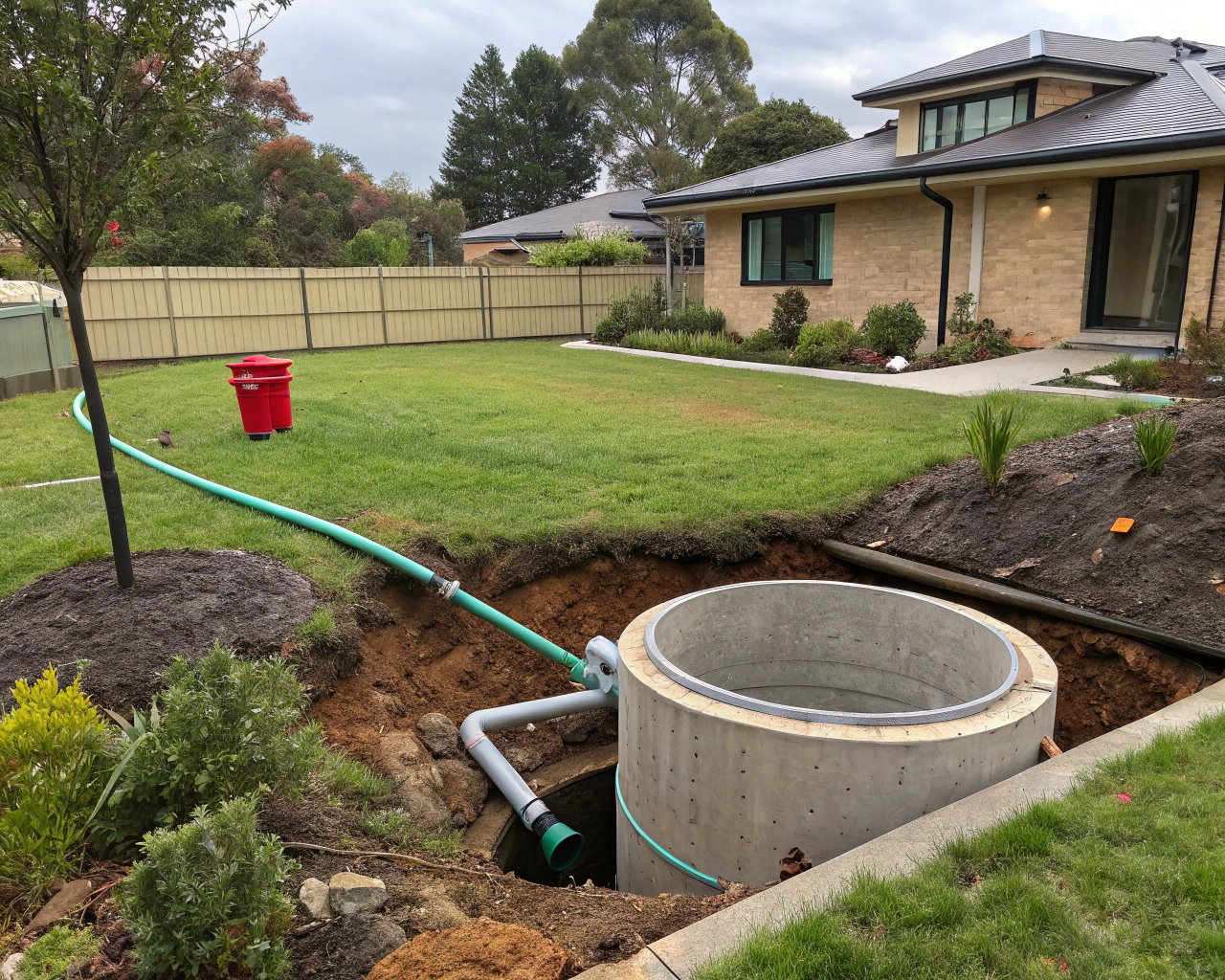
Drainage installation involves earthworks — there’s no way around that. Here’s how the process runs from start to finish.
- Site preparation — work zone is marked out and the area is prepared for excavation
- Trenching and excavation — trenches are dug to the required depth and gradient based on the drainage design
- Pipe and system installation — agricultural pipe, gravel bedding, pits, channels, and other components are installed to the design
- Backfill and compaction — trenches are backfilled and compacted to restore ground level
- Reinstatement — lawn and garden areas disturbed during the install are reinstated on completion
- Final check — the system is checked before we leave the site
The finished result is largely invisible. Pipe systems sit below the surface, and surface components like grated pits and channels are discreet once bedded in properly.
Drainage, Council Compliance, and When Approval Is Required
Not every drainage installation requires council approval — but some do, and it’s worth knowing upfront.
Installations that connect to council stormwater infrastructure, or that involve significant earthworks, may require approval or engineering sign-off before work begins. The rules vary depending on the scope of the job and the specific requirements of Newcastle City Council.
At Landscaping Newcastle Pro, we’re familiar with where those lines are. Part of our assessment process is identifying whether approvals are needed for your specific installation — and if they are, we manage that process on your behalf. It’s not something you need to figure out on your own.
Frequently Asked Questions
The most obvious signs are water pooling on the lawn or paving after rain, garden beds that stay wet for days, lawn dying in patches, and water tracking along fence lines or toward the house. If you’re seeing any of these regularly, the drainage on your property isn’t doing its job.
It depends on the size and complexity of the system. A straightforward subsurface pipe run on a standard block can be done in a day or two. A full site drainage design across a larger or more complex property will take longer. We’ll give you a clear timeframe after we’ve assessed the site.
There will be some temporary disturbance to lawn and garden areas in the work zone — that’s unavoidable with any earthworks job. We reinstate those areas on completion, so the disruption is short-lived.
Surface drainage intercepts water at ground level and redirects it away from problem areas using channels, pits, and catch basins. Subsurface drainage captures groundwater below the surface using slotted pipe bedded in gravel. Most properties we work on need one or a combination of both — it depends on where the water is coming from and how it’s moving across the site.
Not always. Smaller installations that don’t connect to council stormwater infrastructure generally don’t require approval. For larger jobs or those connecting to council systems, approval may be needed. We identify this during our assessment and manage the process if it’s required.
It varies depending on the system type, the size of the area, and the complexity of the install. We don’t quote without seeing the property first — the site assessment is what allows us to give you an accurate price.
Book a Drainage Assessment for Your Newcastle Property
If water is causing problems on your property — pooling after rain, saturating garden beds, tracking toward your foundation — the right move is to get someone on site to look at it properly.
At Landscaping Newcastle Pro, we start with a site assessment. We look at what’s happening across your property, identify the cause, and design a system that fixes it permanently. No guesswork, no generic solutions.
We service Newcastle and the broader Hunter Region.
Call us to book your drainage assessment:
02 4058 1214
The sooner drainage is sorted, the less damage it does. Give Landscaping Newcastle Pro a call today.
