
Mulch plays a bigger role in Port Stephens gardens than most homeowners realise. With sandy…
Paving Repair or Full Replacement? How to Tell the Difference in Newcastle
In This Guide:
- What’s Actually Happening Beneath a Failing Paved Surface
- Is Your Paving Damage Isolated or Widespread?
- When Repeated Repairs Stop Making Financial Sense
- How Newcastle’s Climate and Ground Conditions Affect the Decision
- What a Proper On-Site Assessment Should Cover
Paving problems rarely show up all at once. A hairline crack near the garage, a paver that rocks a bit underfoot, a low patch that pools water after rain — on their own, these seem minor. What’s hard is knowing whether they’re isolated issues a simple repair can fix, or early signs of a subbase problem that’ll keep resurfacing until the whole area gets replaced.
This matters more in Newcastle than most places. The Hunter Region’s mix of heavy seasonal rain, clay-heavy soils in some suburbs, and sandy coastal ground in others means paving failures usually start below the surface, not on it. Fix the visible damage without checking what’s underneath, and you can end up paying for the same job twice.
This guide walks through how to tell the difference, and what to ask before agreeing to either option.
How do I know if my paving needs repair or replacement?
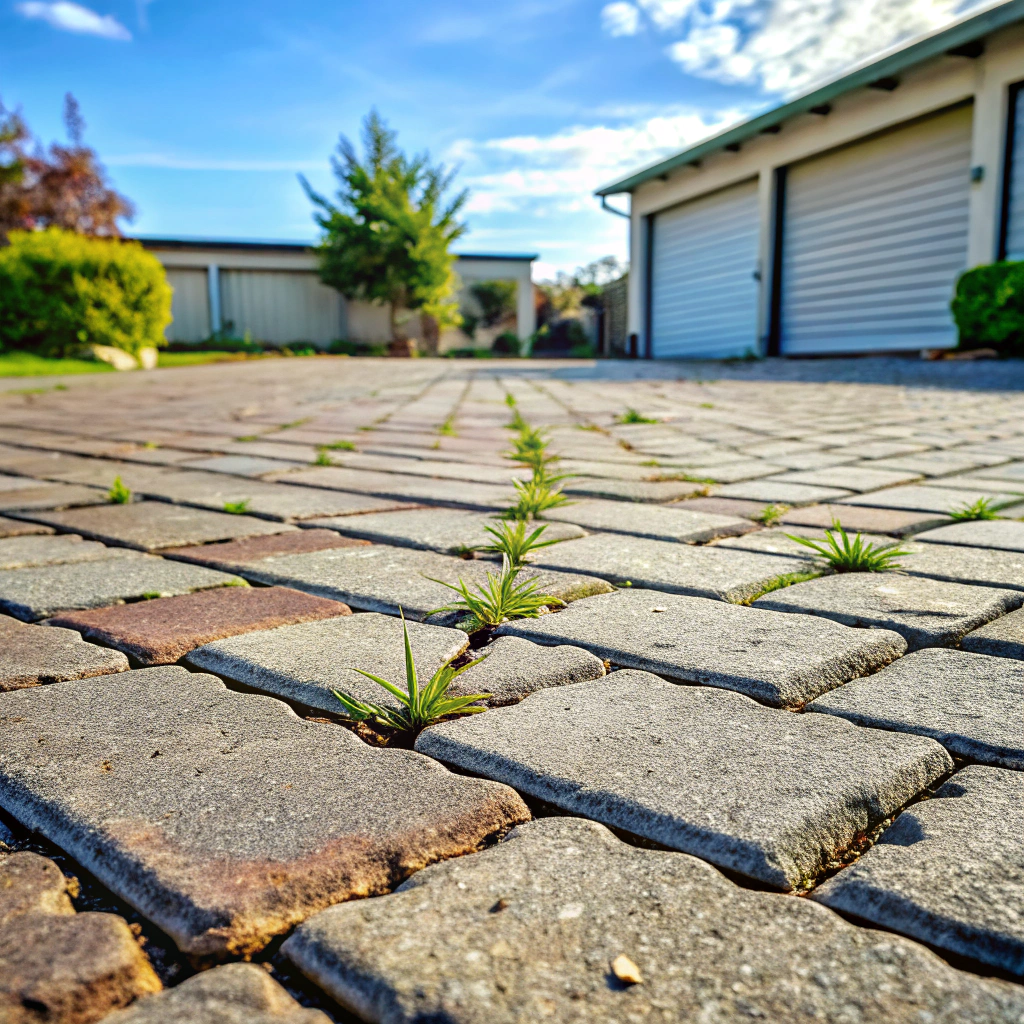
Go with repair when the damage is stuck to a small patch and the base underneath is still solid — think a few cracked pavers, one isolated dip, or joints that have opened up in a single spot. Go with replacement when the problem’s spread across most of the area, or when it’s pointing to something failing below the surface rather than in the pavers themselves.
Here’s what to look for when you’re checking your paving:
- Sunken or uneven sections — usually means the bedding or base underneath has failed, often from drainage issues or tree roots
- Individual cracked or broken pavers — isolated damage that’s typically a straightforward swap
- Loose or rocking pavers — often points to failed edge restraints or washed-out joint sand
- Water pooling on the surface — a sign the slope’s been compromised and may need regrading
- Widespread crumbling or surface wear — spread across most of the area, usually age rather than a one-off problem
What’s Actually Happening Beneath a Failing Paved Surface
Pavers get all the attention because they’re what you see and walk on. But they’re really just the top layer. It’s the compacted base and bedding sand underneath doing the real work — carrying the load, moving water away, keeping everything level. When that layer fails, the surface damage is just the messenger.
The subbase is doing more work than the pavers themselves
A paver can’t sink, crack in a spreading pattern, or start rocking on its own unless something beneath it has given way. So when you see that kind of damage, you’re looking at a surface-level clue to a below-ground problem.
Common causes of subbase failure in established properties
- Poor original compaction — settles unevenly over time, sometimes years later
- Tree root intrusion — roots pushing up or drawing moisture unevenly
- Erosion from redirected water flow — guttering or regrading sending water somewhere it shouldn’t
- Age-related breakdown — bedding sand degrades under constant wet-dry cycling
Is Your Paving Damage Isolated or Widespread? Here’s How to Tell
Once you know it’s the base underneath doing the damage, the next question is how far the problem’s actually spread. That decides whether you’re looking at a repair or a replacement.
Signs the damage is contained
- One or two cracked or chipped pavers
- A single spot of minor unevenness
- Damage clustered in one zone, like near a downpipe
Signs the problem extends further than it looks
- Cracking that radiates outward in a pattern (sometimes called alligatoring)
- Multiple separate areas failing at the same time
- Damage that keeps reappearing near a spot that’s already been repaired
| Repairable Signs | Replacement Signs |
|---|---|
| Single cracked or chipped paver | Cracking spread across multiple zones |
| One isolated dip or low spot | Alligator-pattern cracking |
| Damage near one downpipe or drain | Repeated failures near old repair spots |
| Joints opened in one spot only | Widespread crumbling or surface wear |
If your damage looks more like the right-hand column, that’s usually the base talking, not the pavers.
When Repeated Repairs Stop Making Financial Sense
Every isolated repair looks cheap on its own. That’s exactly why this one catches people out.
The cost-per-fix creep
A single paver swap or a bit of resanding doesn’t cost much. But if the same section keeps needing a call-out over a year or two, those small jobs add up — often to more than a full replacement would’ve cost in the first place. You end up paying for the same fix, again and again, without ever actually fixing anything.
How many repairs is “too many”?
There’s no strict number here. But as a rule of thumb, if the same section has needed attention more than once or twice, it’s worth having the base properly assessed rather than patching it again. Repeated failure in one spot is the base telling you something a filler tube can’t fix.
As a licensed contractor working to recommended standards, we check the base before we touch the surface — that’s what separates a proper assessment from another quick patch.
Not sure if another repair’s worth it? Get a straight answer before you spend again.
How Newcastle’s Climate and Ground Conditions Affect the Repair vs Replace Decision
Where your property sits in Newcastle, and what season it is, both play into whether a repair’s going to hold or fail again.
Wet seasons and subbase saturation
Our seasonal rainfall patterns mean subbase movement shows up more often after a sustained wet stretch. If your paving trouble started or got worse straight after a wet run, that’s not a coincidence — it’s worth having the base checked while the ground’s still telling you something, rather than waiting for it to dry out and go quiet again.
Soil variation across Newcastle suburbs
Newcastle’s ground isn’t consistent from one suburb to the next. Some areas sit on clay-heavy soil that expands and contracts with moisture. Others, closer to the coast, sit on sandy ground that drains fast but compacts differently under load. Paving laid to AS 3727 standards accounts for this at installation — but ground conditions still shift over time, and that’s exactly why the same repair can behave differently in New Lambton than it does in Merewether.
What a Proper On-Site Assessment Should Cover
A rushed quote and a proper assessment can look identical on paper. The difference shows up in what actually gets checked before a number’s put on the job.
Questions a qualified assessor should be able to answer
- Is the base being checked, or just the visible surface?
- Is drainage and slope being assessed, not just the damaged area?
- Is the quote itemised between repair and replacement scope?
If we can’t answer these clearly on-site, we’re guessing — and so is whoever’s paying for it.
Red flags in a rushed quote
- No inspection of the base, only the pavers themselves
- No mention of drainage or where water’s actually going
- A same-day quote with no clarifying questions asked
Quick checklist before you agree to any paving job:
- ☐ Base inspected, not just surface
- ☐ Drainage and slope assessed
- ☐ Quote itemised (repair vs replacement)
- ☐ Clarifying questions were asked about the property
An assessment costs you nothing but a few minutes — and tells you exactly which category your paving falls into.
Request an On-Site Paving Assessment
Get a Straight Answer on Your Paving
You don’t need to keep guessing whether that crack’s a quick fix or the start of something bigger. At Landscaping Newcastle Pro, we check the base before we touch the surface, and we’ll tell you honestly whether you’re looking at an isolated repair or a full replacement.
Whether it’s a driveway in New Lambton, a patio in Merewether, or paving anywhere else across Newcastle, we’ll itemise the quote so you know exactly what you’re paying for and why. No rushed same-day guesses, no patching the same spot for the third time.
An assessment costs you nothing but a few minutes.
📞 Call 02 4058 1214 to book your on-site paving assessment today.

