
How Often Should You Mow Your Lawn in Port Stephens? Mowing frequency is one of…
How Often Should You Mulch Garden Beds in Port Stephens?
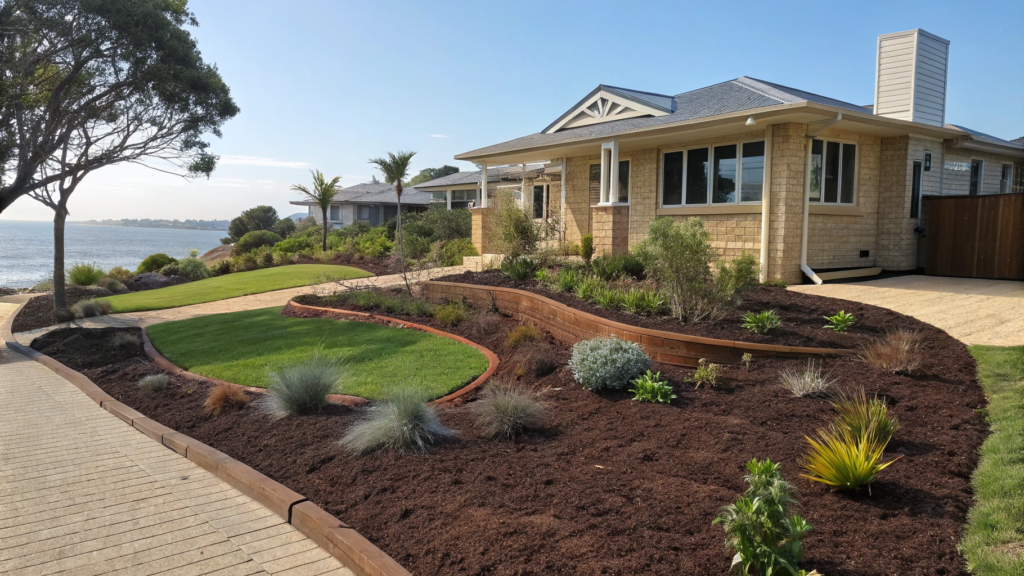
Mulch plays a bigger role in Port Stephens gardens than most homeowners realise. With sandy coastal soil, salt-laden air, and a warm temperate climate, garden beds here lose moisture and organic matter faster than beds further inland. Knowing how often to mulch garden beds in Port Stephens helps you protect plant roots, suppress weeds, and keep soil healthy through every season.
Many homeowners assume mulching once a year is enough, only to find beds looking bare, dry, or weed-choked well before the next top-up is due. The reality is that sandy soils drain quickly and break down mulch at a different rate than clay-based soils, which changes how often replenishment is needed.
This guide covers why mulch breaks down faster in sandy soil, the signs your garden beds are due for a refresh, the best mulch types for coastal properties, and a practical seasonal mulching schedule tailored to the Port Stephens climate. By the end, you’ll know exactly when to mulch, what to use, and how to keep your garden beds performing well all year round.
Most Port Stephens garden beds need fresh mulch every 8 to 12 weeks in sandy, free-draining soil, and every 3 to 4 months in heavier or well-established beds. Coastal sun, wind, and rainfall break mulch down faster than in inland gardens, so beds should be checked seasonally rather than left on a fixed annual schedule. As a guide:
- Sandy, exposed beds: top up every 8–12 weeks
- Shaded or sheltered beds: top up every 3–4 months
- New garden beds or recently planted areas: mulch immediately, then check at the 8-week mark
- After heavy rain or storm season: inspect and replenish as needed
Why Mulch Breaks Down Faster in Sandy Soil
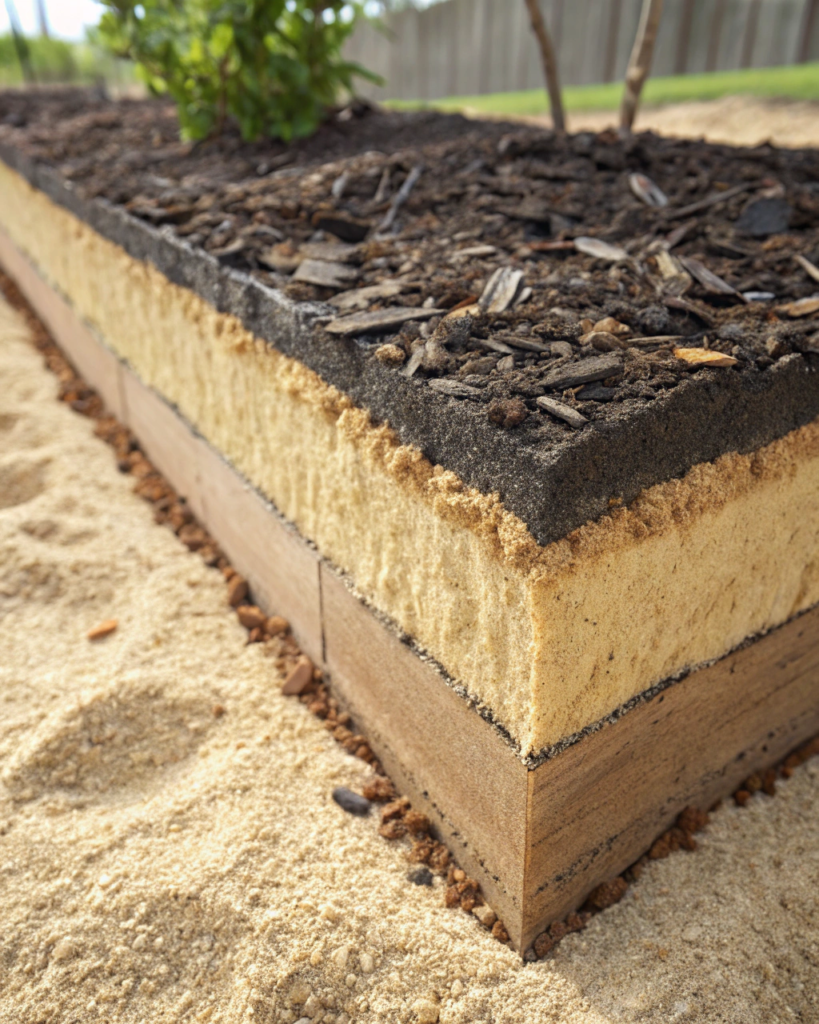
Port Stephens sits on predominantly sandy coastal soil, and sandy soil behaves very differently to the clay-heavy soils found further inland. Sand drains quickly, which is good for preventing waterlogging, but it also means organic mulch breaks down and washes through the soil profile faster than it would on denser ground.
Soil Structure and Drainage
Sandy soil has larger particles and more air gaps than clay soil, so water moves through it rapidly. This constant drainage carries fine mulch particles downward and encourages faster microbial breakdown, since sandy soils tend to warm up and dry out quickly, accelerating decomposition.
Coastal Wind and Sun Exposure
Properties closer to the coast — around Nelson Bay, Salamander Bay, Anna Bay, and Soldiers Point — face near-constant onshore breezes and higher UV exposure. Wind physically shifts lighter mulch types, while sun exposure dries out organic matter and speeds up its breakdown into soil. According to the Bureau of Meteorology, the Port Stephens region experiences a warm temperate climate with strong summer sun and periodic heavy rainfall events, both of which contribute to faster mulch degradation than in more sheltered inland areas.
Salt Air and Soil Chemistry
Salt-laden coastal air can also affect soil chemistry over time, altering microbial activity in the topsoil layer. Combined with sandy drainage, this means mulch in exposed coastal beds simply doesn’t last as long as mulch in a sheltered, clay-based inland garden.
Signs Your Garden Beds Need Fresh Mulch
Rather than mulching on a rigid calendar date, it helps to recognise the physical signs that a bed needs attention.
- Faded colour — mulch that’s turned grey or bleached has lost most of its protective and nutrient value
- Thin coverage — if you can see soil through the mulch layer, it’s no longer suppressing weeds or retaining moisture effectively
- Dry soil underneath — pushing back the mulch and finding bone-dry soil beneath is a clear signal
- Weed emergence — a properly maintained mulch layer suppresses germination; visible new weeds mean the barrier has broken down
- Compacted or crusty texture — mulch that has become hard and crusted no longer allows water to penetrate to the root zone
Checking beds every few weeks, particularly after long dry spells or heavy rain, is a more reliable approach than assuming an annual top-up is enough.
Best Mulch Types for Coastal Properties
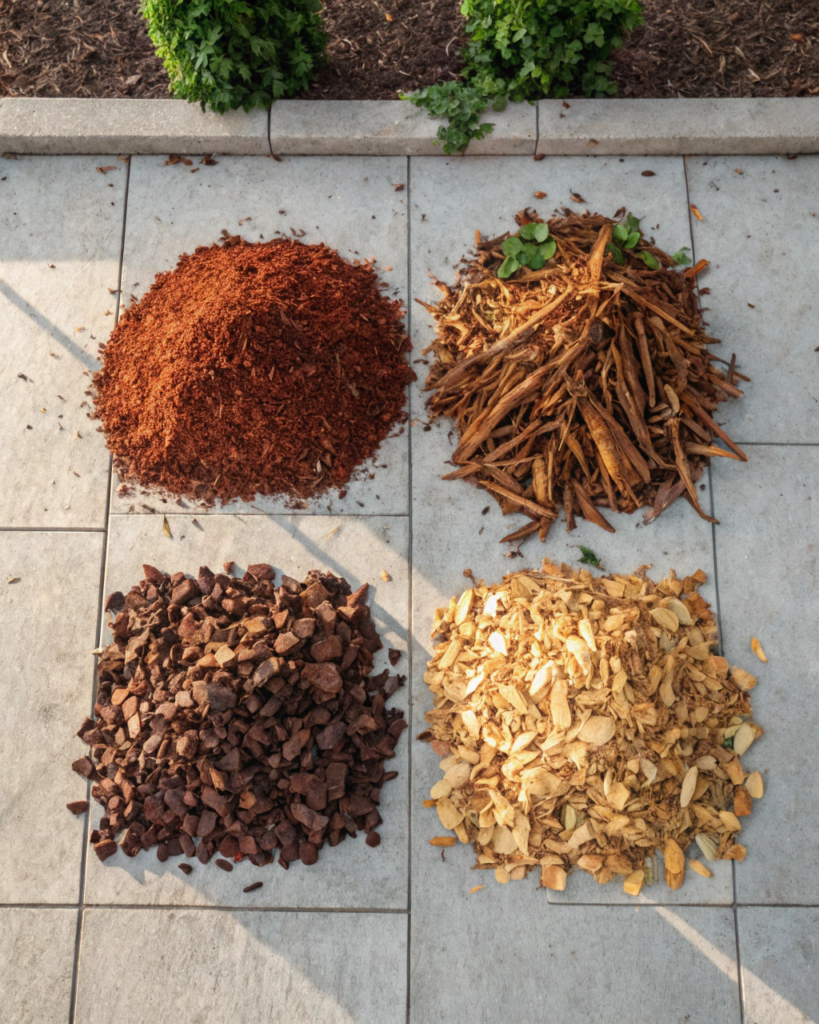
Not all mulch performs equally well in sandy, coastal conditions. Choosing the right type can extend the time between applications and improve overall garden health.
Hardwood Mulch
Dense and slow to break down, hardwood mulch is well suited to exposed Port Stephens beds because it resists wind movement and lasts longer than lighter organic options.
Eucalyptus Mulch
A popular choice across the Hunter region, eucalyptus mulch has natural oils that can help deter some pests while still breaking down steadily to improve soil structure.
Sugarcane Mulch
Lightweight and good for improving soil biology quickly, sugarcane mulch breaks down faster than hardwood — making it better suited to sheltered beds than exposed, windy coastal positions.
Pine Bark and Woodchip
Coarser pine bark and woodchip mulches resist wind displacement well and are a solid option for garden beds along exposed coastal frontages.
For sandy, wind-exposed Port Stephens properties, denser options like hardwood or coarse woodchip generally outperform lighter mulches in both longevity and moisture retention.
Seasonal Mulching Schedule for Port Stephens
| Season | Recommended Action |
|---|---|
| Spring (Sep–Nov) | Full mulch refresh ahead of summer heat; ideal time for new garden beds |
| Summer (Dec–Feb) | Check beds every 6–8 weeks; sun and heat accelerate breakdown |
| Autumn (Mar–May) | Top up after summer depletion; good window for heavier hardwood mulch |
| Winter (Jun–Aug) | Inspect after rain events; lighter maintenance top-up as needed |
Soil moisture guidance from the NSW Department of Primary Industries notes that maintaining consistent organic cover is one of the most effective ways to reduce evaporation and support plant health in free-draining, sandy soils — reinforcing why a seasonal check-in matters more than a once-a-year approach in this region.
Benefits of Staying on Top of Mulching
Keeping garden beds consistently mulched delivers benefits well beyond appearance.
- Water savings — a well-maintained mulch layer reduces evaporation, meaning less frequent watering through Port Stephens summers
- Weed suppression — consistent coverage blocks light from reaching weed seeds, cutting down on manual weeding
- Soil health — organic mulch breaks down into the topsoil, improving structure and nutrient content over time
- Plant survival — protected root zones are more resilient to temperature swings and dry spells
- Reduced maintenance costs — regular, smaller top-ups are more cost-effective than large-scale garden bed rehabilitation after prolonged neglect
A consistent mulching routine is one of the simplest ways to protect the time and money already invested in a Port Stephens garden.
Get Your Garden Beds Mulched Right, Every Season
Staying on top of mulching in Port Stephens’ sandy, coastal conditions takes more attention than a standard annual routine — but you don’t have to manage it alone. Newcastle Landscapes can assess your garden beds, recommend the right mulch type for your property’s exposure, and set up a seasonal schedule so your garden stays protected year-round.
Newcastle Landscapes
📍 Apt 17-303 Turton Rd, New Lambton NSW 2305
📞 0240581214
🌐 landscapingnewcastle.net.au
Get in touch today for a garden bed assessment and mulching quote tailored to your property.


Comments (0)