
Timber Options: Treated Pine vs Hardwood Sleepers
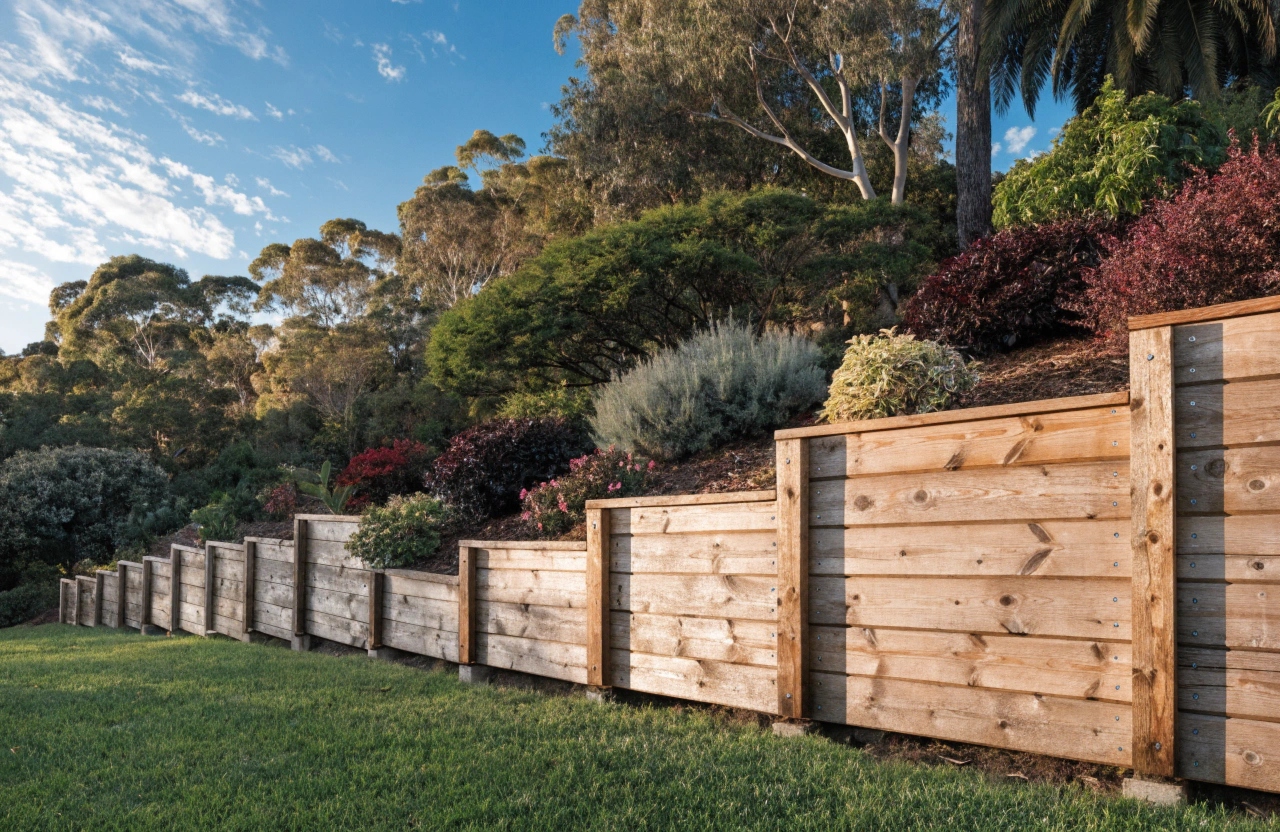
Not all timber retaining walls are built from the same material — and the choice matters more than most people realise.
Treated Pine Sleepers
Treated pine is the most commonly used timber for retaining walls across Newcastle residential properties. It’s cost-effective, widely available, and comes pre-treated with preservative to resist decay in ground contact applications. The treatment rating is what you need to pay attention to — H4 treated pine is the correct specification for standard in-ground garden retaining, while H5 is warranted for higher moisture environments and properties sitting closer to Newcastle’s coastal fringe where conditions are tougher on timber year-round.
Using undersized treatment ratings is one of the most common shortcuts taken on budget installations — and it shortens wall life significantly.
Hardwood Sleepers
Hardwood sleepers — either new product in spotted gum or ironbark, or recycled hardwood railway sleepers — offer a step up in both durability and character. The service life is longer, which partially offsets the higher upfront cost over time.
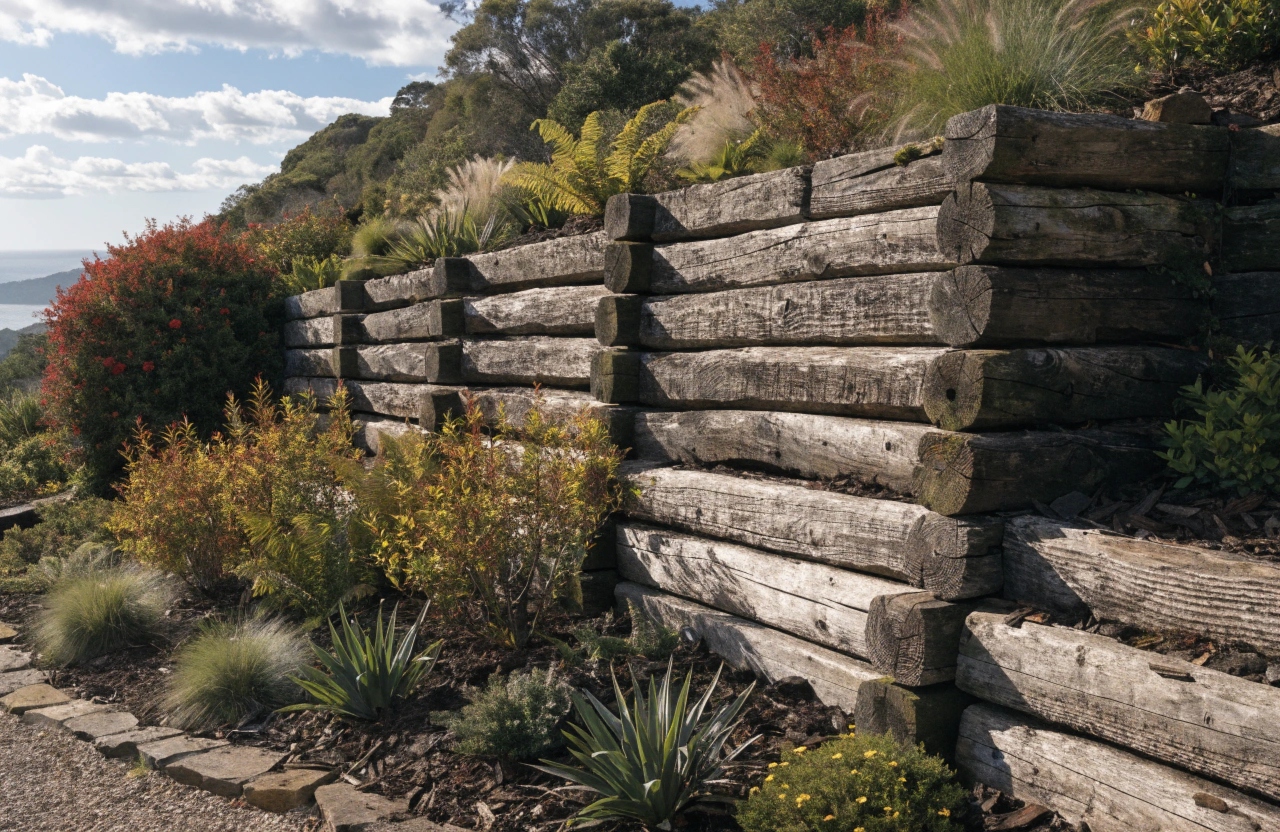
Recycled hardwood sleepers are worth a specific mention. Their aged, weathered surface suits cottage gardens, older Newcastle homes undergoing renovation, and outdoor spaces where a brand-new material would look too clean and out of place. There’s a reason they’re popular in suburbs like Cooks Hill and Hamilton — they fit the character of the housing stock.
We’ll help you choose the right product for your site, budget, and aesthetic before any work begins.

Where Timber Retaining Walls Work Well — and Where They Don't
Timber is a genuinely good retaining wall material for the right applications. But part of doing this job properly is being straight with homeowners about where its limitations start to show.
We’ll tell you honestly which way to go before we quote.
How We Install Timber Retaining Walls in Newcastle
A timber retaining wall that fails within five years almost always comes back to the same root cause — the installation was rushed, the footings were undersized, or the drainage was ignored. Getting the build right from the ground up is what separates a wall that holds for twenty years from one that starts leaning after the first wet season.
Posts and Footings
The structural framework of any timber retaining wall starts with the posts. Treated pine or hardwood posts are set into concrete footings at correct spacing along the wall line. The depth and diameter of those footings relative to wall height is not something to guess at — undersized footings are the single most common cause of timber retaining wall failure we see on Newcastle properties. The taller the wall, the deeper and stronger the footing needs to be.
Sleeper Courses
Once posts are set and footings have cured, horizontal sleepers are fixed to the posts in courses, building the wall up to the required height. Each course is secured properly — not just stacked and hoped for the best.
Drainage Behind the Wall
This step gets skipped more than it should. Agricultural drainage pipe and gravel backfill installed behind the wall manages moisture and gives water somewhere to go rather than sitting against the timber. In Newcastle’s wet seasons, that drainage layer is what keeps a timber wall in good condition for the long haul. Saturated soil against untreated or poorly drained timber will accelerate decay regardless of treatment rating.
Why Newcastle Homeowners Choose Us for Timber Retaining Wall Installation
There’s no shortage of landscapers and handymen around Newcastle who’ll put a timber retaining wall in for you. The difference tends to show up about three years later — when the posts are leaning, the sleepers have bowed, and water is pooling behind the wall every time it rains.
We’ve been building retaining walls across Newcastle and the Hunter Region long enough to know what a properly built wall looks like, and more importantly, what a poorly built one costs the homeowner to fix.
What We Bring to Every Timber Wall Job
• Correct material specification from the start — right treatment rating, right timber product for your site conditions and aesthetic
• Properly engineered footings — post depth and concrete footing size calculated relative to wall height, not guessed
• Drainage installed as standard — agricultural pipe and gravel backfill behind every wall we build
• Honest advice before we quote — if timber isn’t the right material for your site, we’ll tell you and explain why
Local Knowledge Matters
Newcastle’s coastal humidity, clay-heavy soils in suburbs like Wallsend and Waratah, and the wet season intensity across the Hunter Region all affect how a timber wall performs over time. We factor those local conditions into every build — not just the dimensions on the plan.
We work across Newcastle, Lake Macquarie, Maitland, Cessnock, and the broader Hunter Region.
Timber Retaining Wall Cost in Newcastle — What to Expect
Cost is usually one of the first questions we get, and it’s a fair one. Timber retaining walls are generally the most affordable retaining wall option available — which is a genuine advantage for homeowners who need a practical solution without a large budget commitment.
That said, what you pay depends on a handful of site-specific variables that affect every quote we put together.
What Affects the Cost of a Timber Retaining Wall
• Wall height and length — more timber, more posts, more concrete for footings. Longer and taller walls cost more, straightforwardly
• Timber product chosen — treated pine sleepers sit at a lower price point than new hardwood; recycled hardwood railway sleepers vary depending on availability and condition
• Site access — tight side access in older Newcastle suburbs like Adamstown or Hamilton adds time and handling cost compared to open access on newer estates
• Drainage requirements — properties with known drainage issues or clay-heavy soil profiles need more extensive agricultural drainage behind the wall
• Excavation required — sloped sites often need material cut and removed before any wall construction begins
A Practical Guide on Price
Timber retaining walls are cost-effective at low to medium heights. As wall height increases past a metre, the cost gap between timber and concrete sleepers narrows — and at that point the longer service life of concrete often makes more financial sense over the full life of the wall.
We provide detailed, itemised quotes so you know exactly what you’re paying for before any work begins. No vague estimates, no surprises on invoice day.
Frequently Asked Questions — Timber Retaining Walls Newcastle
Treated pine retaining walls typically last fifteen to twenty-five years, depending on site conditions and drainage quality. Newcastle’s coastal humidity and wet seasons sit at the shorter end of that range. Hardwood sleepers generally outlast treated pine. Proper drainage installation is the single biggest factor in extending timber wall life regardless of the product used.
In Newcastle, retaining walls under certain height thresholds can typically be built as exempt development — but this depends on wall height, proximity to boundaries, and whether the work affects drainage or neighbouring properties. We’ll flag anything on your site that warrants a council check before we start.
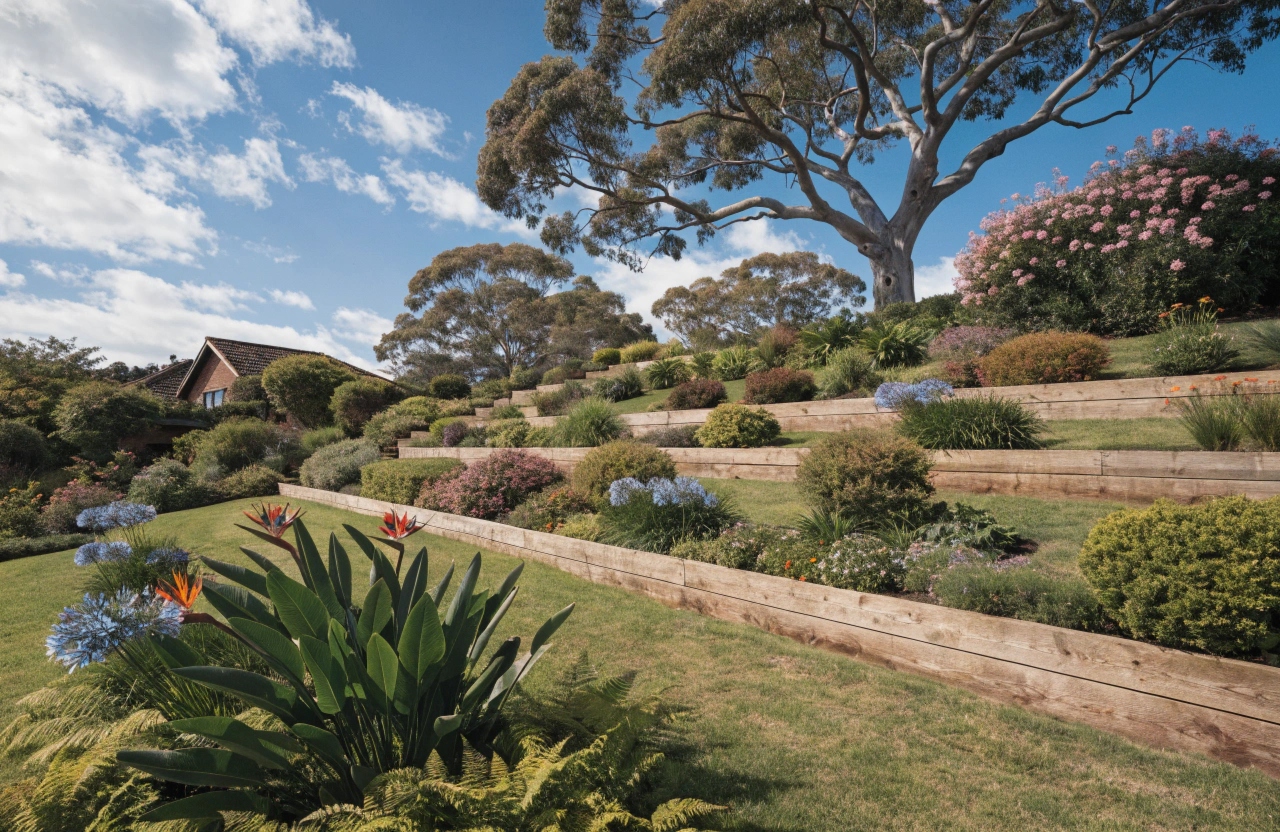
Timber works well for gentle to moderate slopes using a terraced approach — multiple lower walls stepping up the grade rather than one tall wall. For steep sites requiring a single wall over a metre in height, concrete sleepers are usually a better fit structurally.
H4 is the correct treatment rating for standard in-ground garden retaining applications. H5 is specified for higher moisture environments — relevant for Newcastle properties close to the coast or in areas with consistent waterlogging. Using H3 treated pine in ground contact is an under-specification that shortens wall life considerably.
Yes — old wall removal and disposal can be included in your quote if needed.
Get a Timber Retaining Wall Quote in Newcastle
If you’ve got a sloping garden, a retaining wall that’s seen better days, or a terracing project you’ve been putting off — we’re ready to come out, look at the site, and give you a straight quote.
No vague ballpark figures over the phone. No pressure to commit on the day. Just an honest assessment of what the job involves, which timber product suits your site, and what it’s going to cost to do it properly.
We work across Newcastle and the Hunter Region — including Lake Macquarie, Maitland, Cessnock, Charlestown, New Lambton, Merewether, Wallsend, Cardiff, Glendale, and surrounding suburbs. If you’re in the region, we can get out to you.
What Happens When You Get in Touch
• We arrange a time to visit your property and look at the site in person
• We assess wall height, soil conditions, drainage, and access
• We recommend the right timber product for your specific site and budget
• We provide a detailed, itemised written quote — no surprises
Timber retaining walls done properly are a cost-effective, long-lasting solution for the right applications. Done poorly, they’re an expensive repair job two wet seasons down the track.
We’ve been building retaining walls across Newcastle long enough to know the difference — and we build every wall like it needs to last.
Call us today or fill in the contact form to book your on-site quote.
