
Coastal Retaining Walls in Newcastle – Built to Withstand Erosion and Harsh Conditions
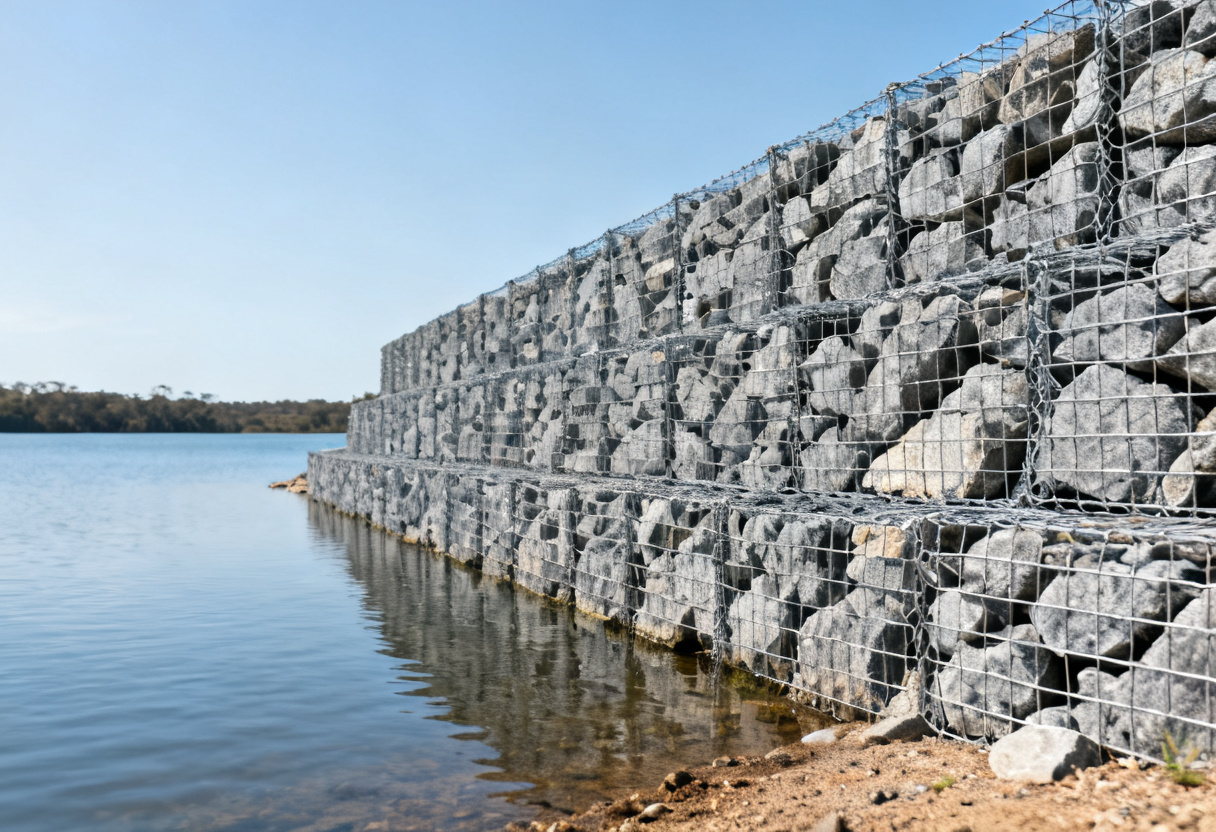
A Newcastle homeowner on the Lake Macquarie foreshore called us after three consecutive storm events had eaten nearly two metres of embankment off the back of his property. The retaining wall he’d had built five years earlier — standard treated pine, standard hardware — was leaning at a forty-five degree angle, undermined at the base, fixings rusted through. What started as a manageable slope had become a genuine threat to his shed foundations.
That story isn’t unusual around here. From Stockton Beach in the north through to Redhead and Caves Beach in the south, and across the entire Lake Macquarie foreshore, Newcastle coastal and lakeside properties face erosion pressure that most standard retaining solutions simply aren’t built to handle.
We design and build coastal erosion retaining walls specifically for Newcastle’s coastal environment — engineered for the exposure, built with the right materials, and done properly the first time.

Understanding Coastal Erosion in Newcastle
Newcastle’s coastline and lake foreshore create a range of erosion mechanisms — and each one demands a different response. Getting the diagnosis right before you build anything is what separates a wall that holds from one that fails after the next big storm.
Material Requirements for Coastal Retaining
The single most common reason coastal retaining walls fail prematurely isn’t the design — it’s the materials. What works perfectly well in a standard residential garden situation deteriorates rapidly the moment you introduce salt-saturated soil, marine spray, and persistent moisture.
Rock Armour and Gabion Baskets
For high-energy wave exposure situations, rock armour and gabion baskets filled with durable stone are among the most effective coastal protection options available. They absorb and dissipate wave energy rather than resisting it rigidly — which is exactly what high-exposure sites need.
Reinforced and Mass Concrete Structures
Engineered reinforced concrete and mass concrete walls provide serious structural protection for coastal erosion applications. Specified correctly for the coastal environment, these structures deliver long-term performance where other materials would be compromised by the chemical and physical conditions of direct coastal exposure.
Marine-Grade Treated Hardwood
For lower-exposure applications — sheltered foreshore positions, partially protected lakeside banks — marine-grade treated hardwood performs reliably when specified and installed correctly. The distinction between marine-grade treatment and standard residential treatment is not a minor detail in a coastal environment.
Geotextile Fabrics and Erosion Control Systems
Geotextile fabrics are a critical component of properly engineered coastal erosion control. Used behind and beneath retaining structures, they prevent fine soil particles from washing through the wall while allowing water movement — maintaining the structural integrity of the retained material over time.
Integrated Erosion Management
A retaining wall addresses the immediate threat — but coastal erosion is a system problem, and a wall on its own rarely tells the whole story.
The most effective coastal erosion solutions combine structural retaining with complementary measures: coastal revegetation using deep-rooted native species that stabilise soil at the root zone level, stormwater management that prevents concentrated runoff from accelerating erosion at specific points along your embankment, and ongoing monitoring that catches emerging pressure before the next storm event turns it into an emergency call.
We approach coastal erosion retaining as part of that broader picture. Where revegetation or stormwater management forms part of the solution, we’ll tell you — because a retaining wall that’s doing all the work on its own is working harder than it needs to.


FAQs — Coastal Erosion Retaining Walls
How much does a coastal erosion retaining wall cost in Newcastle?
Coastal retaining is genuinely more expensive than standard residential retaining — materials, engineering, and approval costs are all higher, and that’s before you factor in site access on foreshore properties. For most Newcastle coastal and Lake Macquarie foreshore jobs, you’re looking at a meaningful investment, but that cost needs to be weighed against what unmanaged erosion is doing to your land value and structural risk every wet season. I’d rather give you a proper site-specific number than throw a figure around that sets the wrong expectation.
How long does a coastal retaining wall last in Newcastle's conditions?
A wall that’s been specified correctly for coastal exposure — right materials, right hardware, right drainage — should give you decades of reliable performance even in direct ocean or lake foreshore conditions. The walls that fail early are almost always the ones built with standard residential materials that weren’t rated for the salt load and moisture levels Newcastle’s coastal environment throws at them. Done right the first time, you shouldn’t be looking at this problem again.
Do I need an engineer for a coastal erosion retaining wall?
Yes, and I’d be cautious about anyone who tells you otherwise for a coastal application. NSW coastal zone requirements and council regulations for both Newcastle City and Lake Macquarie commonly require engineered drawings, and any wall of meaningful height will trigger that regardless of location. Getting engineering done upfront actually protects you — it means the wall is built to a standard that holds up under both storm conditions and regulatory scrutiny.
How long does the approval process take for foreshore retaining work in Newcastle?
It varies depending on your specific location, the scale of the works, and whether your property falls under Newcastle City Council or Lake Macquarie City Council jurisdiction. Straightforward applications can move through in a matter of weeks; more complex projects on sensitive coastal land can take longer, particularly if a Coastal Management Program assessment is required. Starting the approval process early is the move — waiting until summer storm season is imminent and then trying to rush approvals is a stressful situation that’s easy to avoid.
Can I plant vegetation instead of building a retaining wall to stop erosion?
Revegetation alone can work on very low-energy sites with minor surface erosion, but for most Newcastle ocean-facing or Lake Macquarie foreshore properties where active undercutting or tidal scour is occurring, plants by themselves won’t hold the line. Deep-rooted coastal natives are genuinely useful — I recommend them as part of almost every coastal erosion solution we put together — but they need a structural wall behind them to protect the root zone while the vegetation establishes. Think of it as plants and retaining working together, not one replacing the other.
What's the difference between a retaining wall and rock armour for coastal erosion?
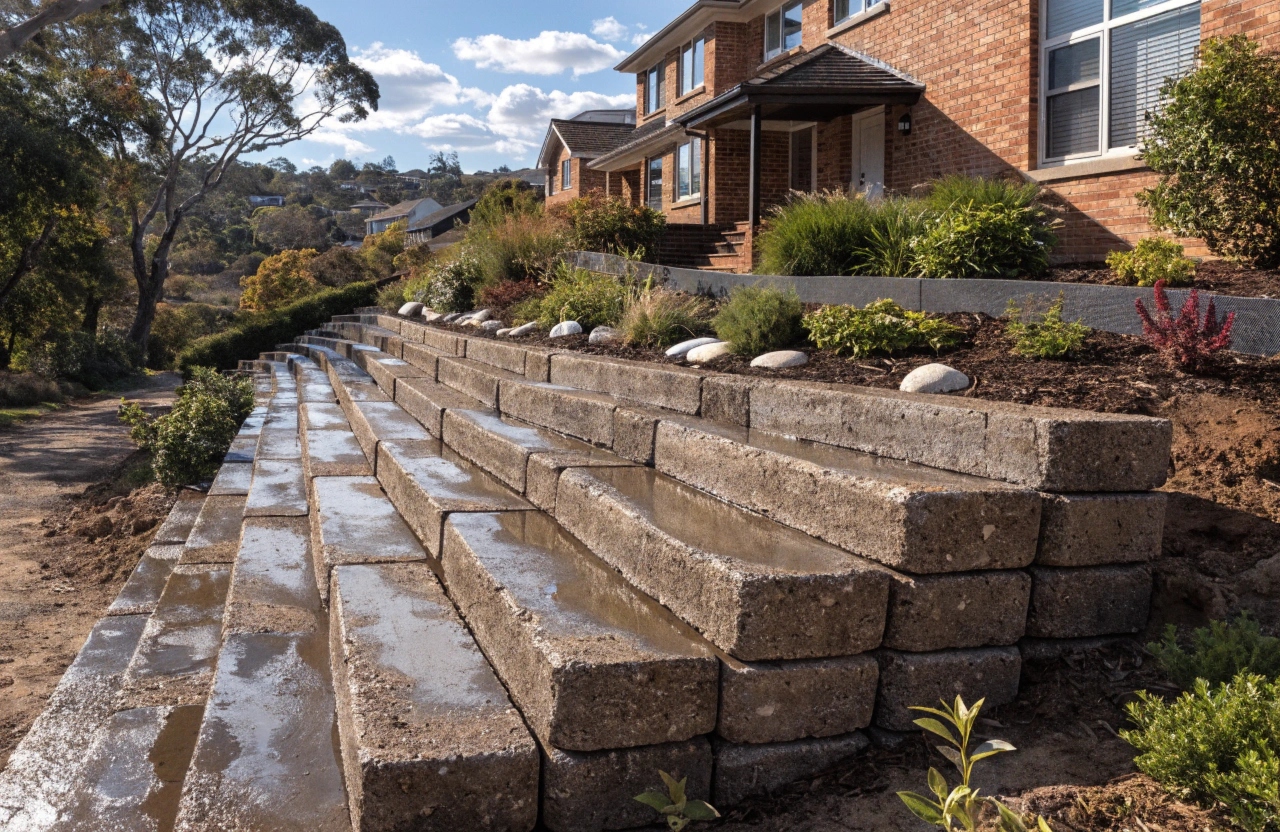
A retaining wall holds a defined soil face vertically or at a controlled batter angle, while rock armour is a mass of large stone placed at the base of an embankment to absorb and break up wave energy before it reaches the soil. On high-energy ocean-facing sites around Merewether, Redhead, or Caves Beach, rock armour is often the right front-line solution because it works with the wave energy rather than resisting it directly. On Lake Macquarie foreshore properties with lower wave energy, a properly engineered retaining wall is often the more practical and visually appropriate option — sometimes the two are used together on the same site.
Talk to Us Before the Next Storm Season
If you’re a Newcastle coastal or lakeside property owner watching your embankment shrink with each weather event, now is the time to get a professional set of eyes on it — not after the next storm takes another metre off the back of your block.
Coastal erosion is a progressive problem. Every storm event that passes without a proper retaining solution in place compounds the damage and adds to the eventual cost of fixing it. Early professional intervention is always less expensive, less disruptive, and less stressful than addressing advanced erosion damage on a property that’s had years of storm seasons working against it.
Get in touch with us for an urgent site assessment. We’ll look at what’s happening on your specific property, give you a straight assessment of the risk, and walk you through the right structural solution for your site, your coastal exposure, and your approval requirements.
