
Drought-Resistant Garden Design Newcastle for Low-Water, Year-Round Appeal
Newcastle is a beautiful place to own a home — but if you’ve watched a garden you’ve invested real money into go brown and patchy every February, you know the frustration. The Hunter Region’s summers are warm, dry spells hit harder than people expect, and sandy coastal soils drain moisture fast. Throw in water restrictions that pop up across Greater Newcastle without much warning, and a thirsty exotic garden starts feeling like a liability rather than an asset.
That’s where drought-resistant garden design changes everything.
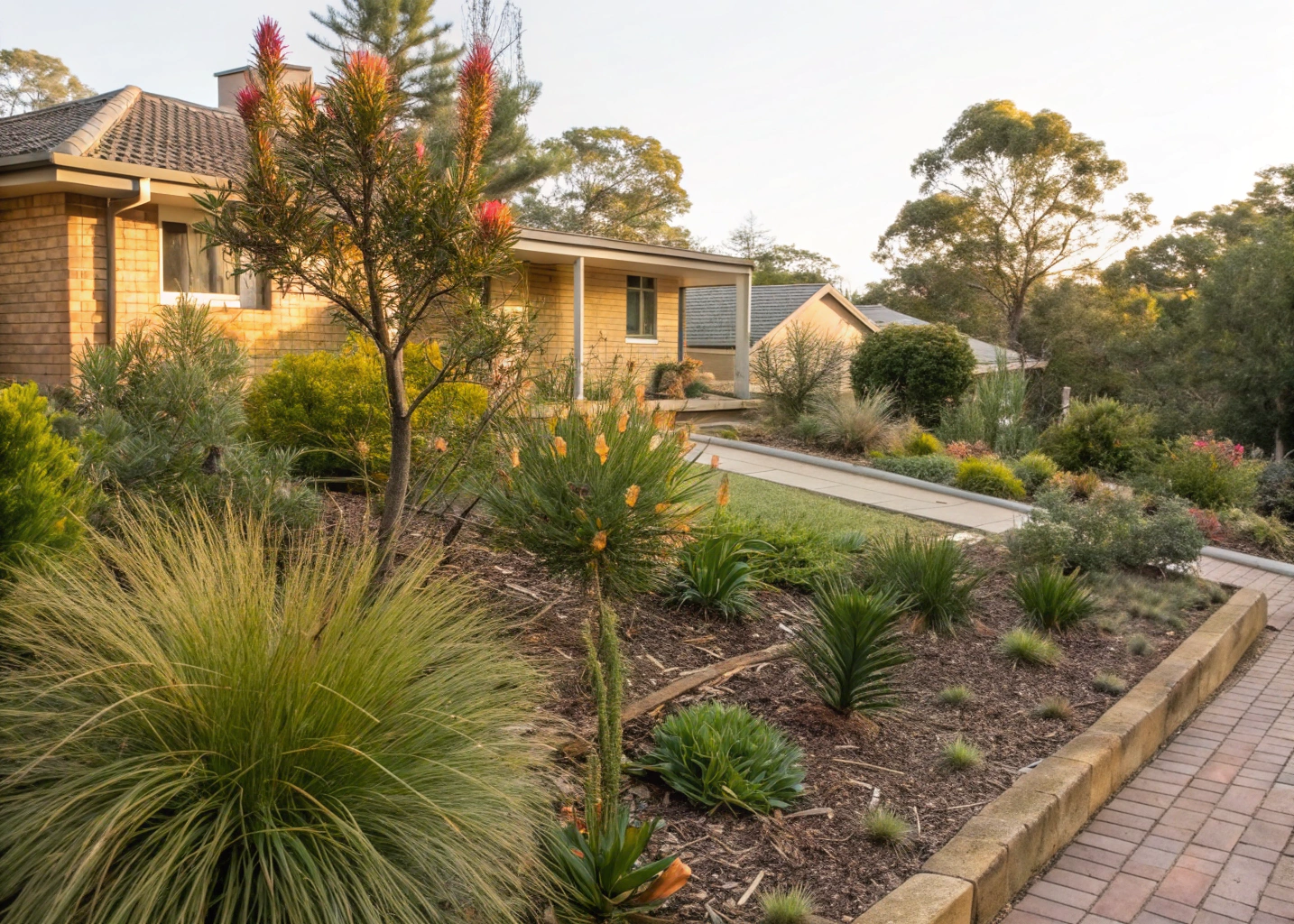
We design gardens across Newcastle — from Merewether and Cooks Hill through to New Lambton, Kotara, Cardiff, and Fletcher — that genuinely look beautiful all year round, even when the rain doesn’t show up on schedule. Water-wise doesn’t mean bare. It doesn’t mean boring. It means designed smart from the ground up, so your garden performs without demanding constant attention, constant watering, or constant replanting.

Rethinking What Drought-Resistant Really Means
Forget gravel, forget cacti, forget that sparse, sun-bleached look that makes a yard feel more like a car park than a garden. That’s not what drought-resistant design looks like when it’s done properly.
Plant Selection: The Foundation of Every Drought-Resistant Design
Get the plant palette right and everything else becomes easier. This is where most gardens fail — the wrong plants in the wrong place, working against the local climate rather than with it.
Australian Natives Built for This
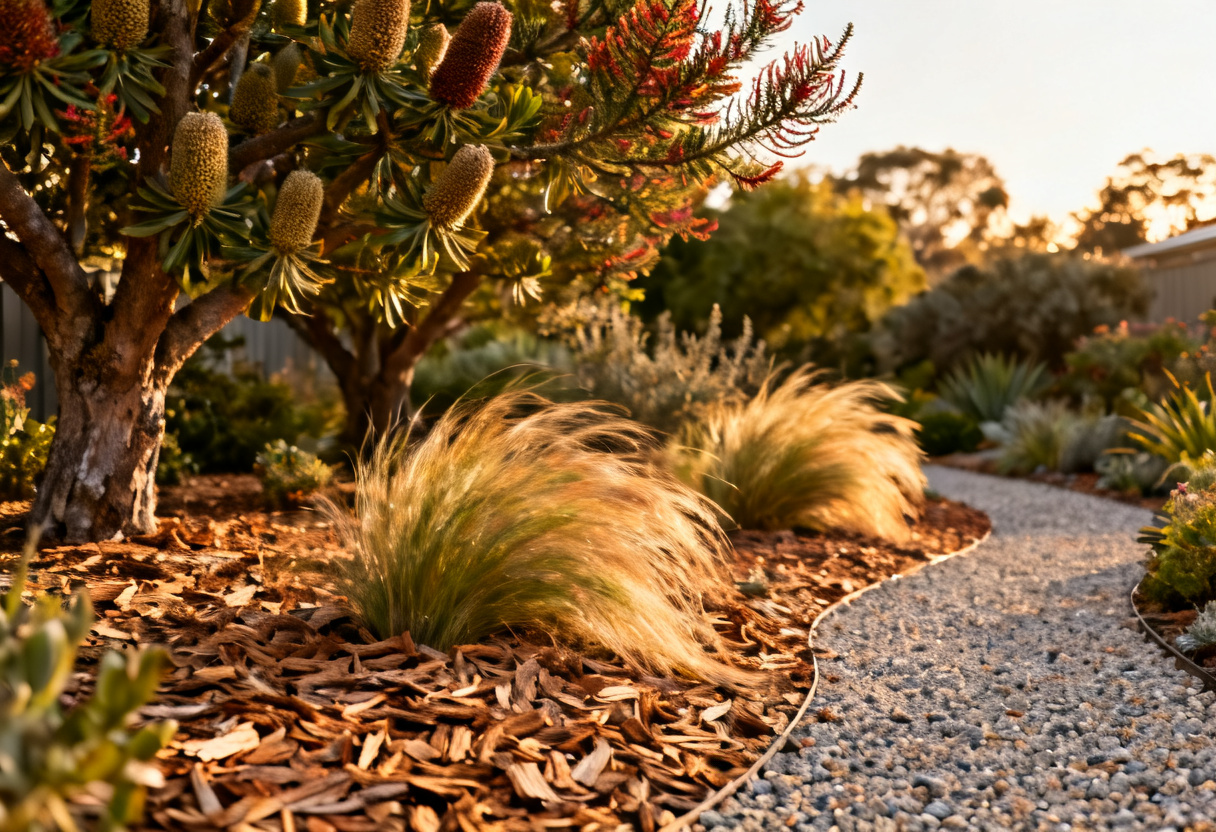
Australian natives are the natural anchor of any drought-resistant Newcastle garden. Species like Banksia, Grevillea, Xanthorrhoea, Westringia, and Callistemon have evolved over millennia in Australian conditions. Once established, they need minimal supplementary water and reward you with year-round structure, seasonal flower colour, and genuine wildlife value.
Local Hunter Region Provenance Natives
Where possible, we source natives of local Hunter Region provenance — plants specifically adapted to the rainfall patterns, soil types, and temperature ranges of the Newcastle area. These perform more reliably than broadly sourced stock and establish faster, reducing the critical window when new plantings need supplementary irrigation.
Mediterranean Climate Plants as Design Workhorses
Plants from the Mediterranean basin, South Africa, California, and Chile share a climate profile remarkably similar to eastern Australia. Lavender, Rosemary, Salvia, Cistus, Aloe, Agave, and ornamental grasses deliver colour, fragrance, and texture across the whole garden bed with very low water demand once they’re in the ground.
Succulents and Structural Accent Plants
Agave, Aloe, Echeveria, and Crassula store moisture in their foliage and handle extended dry periods without irrigation. Used as feature plants, container specimens, or bold accents within a broader planting scheme, they add sculptural interest and real resilience without dominating the design or making the garden look like a succulent nursery.
Soil Preparation: Getting the Foundation Right
Why This Step Can’t Be Skipped: Incorporating organic matter, soil wetting agents, and water-retention products at planting time dramatically improves a plant’s ability to draw moisture between rainfall events and irrigation cycles. Trying to correct poor soil after plants are already in the ground is far harder and far less effective. Getting this foundation right at installation is one of the most impactful decisions made in any drought-resistant garden build.
Mulching: One of the Highest-Impact Tools Available
Depth, Coverage, and Material Choice: A correctly applied organic mulch layer of 75 to 100mm across all garden beds reduces evaporative moisture loss from soil by up to 70 percent. It suppresses weed competition, moderates soil temperature during Newcastle’s hot summer periods, and gradually improves soil structure as it breaks down. Wood chip and sugar cane mulch are the preferred options in most situations — though in exposed coastal Newcastle locations, heavier mulch materials are often selected to prevent displacement by strong northerly winds.
Irrigation Design That Works With the Garden, Not Against It
Drip Irrigation Over Overhead Sprinklers: Drip irrigation delivers moisture directly to root zones, cutting evaporative loss significantly compared to overhead sprinkler systems. It also keeps foliage dry, which reduces fungal disease pressure — a genuine consideration in Newcastle’s humid coastal microclimate. Smart controllers with weather-based adjustment, soil moisture sensors, and zoning by plant water requirements mean the system runs only when it actually needs to, not on a fixed timer regardless of conditions.
Lawn Alternatives: Addressing the Biggest Water User in the Garden
Conventional lawn is the single largest water consumer in most residential Newcastle gardens — particularly cool-season grasses that struggle through the local summer heat and demand regular irrigation to stay presentable.
Drought-Tolerant Turf Varieties
Zoysia and Buffalo grass varieties offer meaningfully reduced water demand compared to conventional lawn options, making them the smarter choice when a traditional lawn is still a priority for the household — particularly for families with young children or dogs who genuinely use the space.
Groundcovers, Decomposed Granite, and Paving
For areas where a traditional lawn isn’t actually needed, groundcover plantings, decomposed granite surfaces, and paved areas can eliminate irrigated lawn areas entirely. Reducing or replacing conventional lawn is one of the most effective water-saving strategies available — and it cuts ongoing mowing time and cost at the same time.


FAQs — Drought-Resistant Garden Design
How long does it take for a drought-resistant garden to establish in Newcastle?
Most drought-resistant plantings need around one full growing season — roughly 6 to 12 months — before they’re pulling enough moisture independently to handle Newcastle’s dry summers without supplementary irrigation. During that establishment window, a good drip system does the heavy lifting. Once the root systems are down, you’ll be surprised how little input the garden actually needs.
Can a drought-resistant garden work on a small suburban block in Newcastle?
Absolutely — some of the best results I’ve seen have been on standard 600m² blocks in suburbs like New Lambton, Kotara, and Charlestown where the owners wanted low maintenance without sacrificing street appeal. Scale doesn’t limit what’s achievable with water-wise design; it just changes how the plant palette and hard surfaces are balanced. A smaller garden often means the transformation is even more dramatic.
Will a drought-resistant garden still attract birds and wildlife?
Yes — native species like Banksia, Grevillea, and Callistemon are among the best bird-attracting plants you can put in a Newcastle garden, and they’re drought-tolerant by nature. I actually find that water-wise native gardens support more consistent wildlife activity than conventional exotic plantings because they’re providing the food sources local birds have evolved to use. It’s one of the genuinely rewarding bonuses of going native.
What's the best time of year to install a drought-resistant garden in Newcastle?
Autumn is my preferred window — roughly March through May — because the soil is still warm from summer, the worst of the heat has passed, and the cooler months ahead give new plantings the gentlest possible establishment conditions before the next summer hits. Spring is a solid second option. Installing in the middle of a Newcastle summer puts unnecessary pressure on new plants and increases your water use during establishment significantly.
Do drought-resistant gardens need any ongoing maintenance at all?
They’re low maintenance, not zero maintenance — there’s a difference worth being clear about. Seasonal mulch top-ups, occasional pruning to maintain shape, and a yearly soil health check are the main things I’d recommend. Compared to a conventional garden with weekly mowing, regular irrigation system babysitting, and constant replanting after dry spells, the workload drop-off is substantial.
Can I keep some lawn and still have a drought-resistant garden?
Yes, and for most Newcastle families with kids or dogs, keeping some lawn is completely reasonable — it’s about selecting the right turf variety and reducing the total lawn footprint rather than eliminating it entirely. Zoysia is my go-to recommendation for Newcastle properties that want a durable, good-looking lawn with genuinely lower water demand than a standard kikuyu or couch. Pair it with drought-tolerant garden beds around the perimeter and the overall water consumption of the property drops considerably.
Ready to Design a Garden That Works Through Every Newcastle Summer?
A drought-resistant garden isn’t a compromise — it’s a better-designed garden. One that looks genuinely beautiful, performs reliably through Newcastle’s dry periods, and doesn’t demand excessive time, water, or cost from you to keep it that way.
We design drought-resistant gardens across Newcastle and the Hunter Region — locally appropriate, built to last, and genuinely worth inviting people into. Get in touch today to book a consultation and talk through what’s possible for your property.
