
What Professional Retaining Wall Installation Actually Involves
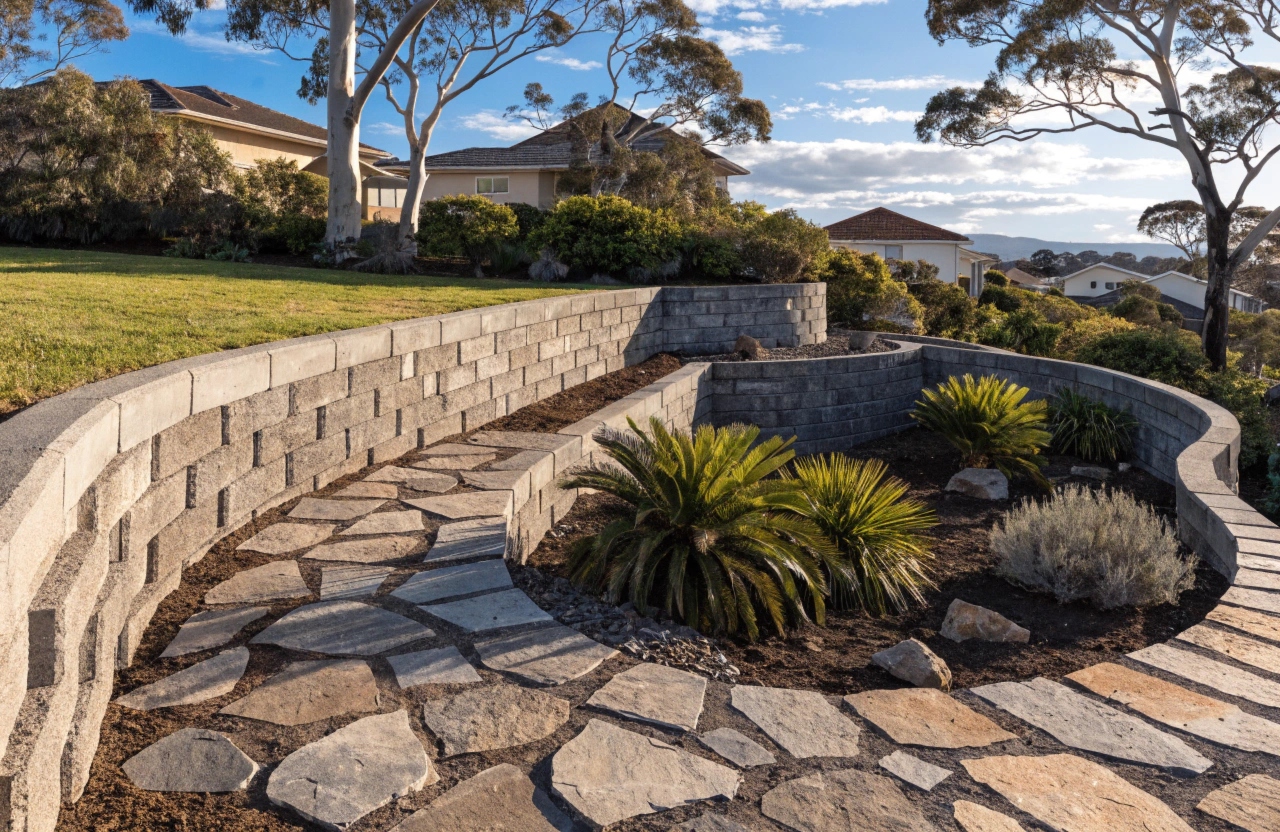
Most retaining wall failures in Newcastle residential properties come down to one thing — shortcuts taken during installation. A wall that looks solid on day one can be undermined by poor footings, missing drainage, or the wrong material choice for the site. Here’s what a professional installation process looks like from start to finish.
Site Assessment Before a single shovel goes in the ground, we assess the site properly. Soil conditions, slope gradient, loading requirements above the wall, what’s sitting near the boundary, and the drainage situation behind the proposed wall location. This step determines everything that follows.
Design and Material Selection The right wall for your block depends on height, load, soil type, aesthetics, and budget. We’ll recommend the correct system for your specific application — not just what’s cheapest or fastest to install.
Excavation and Footings Every wall type requires the correct foundation. Footings that are undersized or poorly prepared are one of the most common causes of wall movement over time.
Construction to Correct Batter and Alignment A retaining wall needs to be built to the correct angle, height, and alignment throughout. This isn’t something you adjust at the end.
Drainage Installation Agricultural pipe and gravel backfill installed behind the wall before backfilling. This step manages hydrostatic pressure — and it’s the step that gets skipped most often on substandard jobs.
Backfilling and Compaction Controlled backfill in staged lifts with proper compaction. Rushing this stage causes wall movement and settlement behind the structure.

Retaining Wall Materials We Install in Newcastle
Not every wall suits every site. The material you choose affects the structural performance, the lifespan, the maintenance requirements, and the way the finished wall sits within your property. We install across the full range of retaining wall systems — and we’ll advise you on what’s right for your specific application, not just what’s easiest for us to source.
Engineering and Council Approval for Retaining Walls in Newcastle
This is the part of a retaining wall project that catches a lot of Newcastle homeowners off guard — and it’s the part that unlicensed or inexperienced operators often gloss over entirely.
In NSW, retaining walls over 600mm in height typically require council approval before construction begins. Walls near boundary lines, existing structures, or in areas with known ground instability carry additional requirements on top of that. In some cases — particularly for taller walls or walls on coastal and hillside properties — engineering certification is required before approval will be granted.
What This Means For Your Project
If your wall needs approval and the installer doesn’t flag it, you’re exposed. Council can order the wall removed. Your insurer may not cover damage caused by an unapproved structure. And if you’re selling the property down the track, an unapproved retaining wall becomes a disclosure problem.
How We Handle It
We identify whether your wall requires council approval or engineering sign-off at the assessment stage — before you’ve committed to anything. Where certification is needed, we manage that process on your behalf. We work with structural engineers familiar with Newcastle’s soil profiles and council requirements across Newcastle City, Lake Macquarie, and Maitland LGAs.
Most homeowners find the approval side of a retaining wall project the most stressful part. We’ve done this enough times that it’s just part of the process for us — not an obstacle, not an afterthought. We handle it so you don’t have to spend your evenings decoding council planning portals.
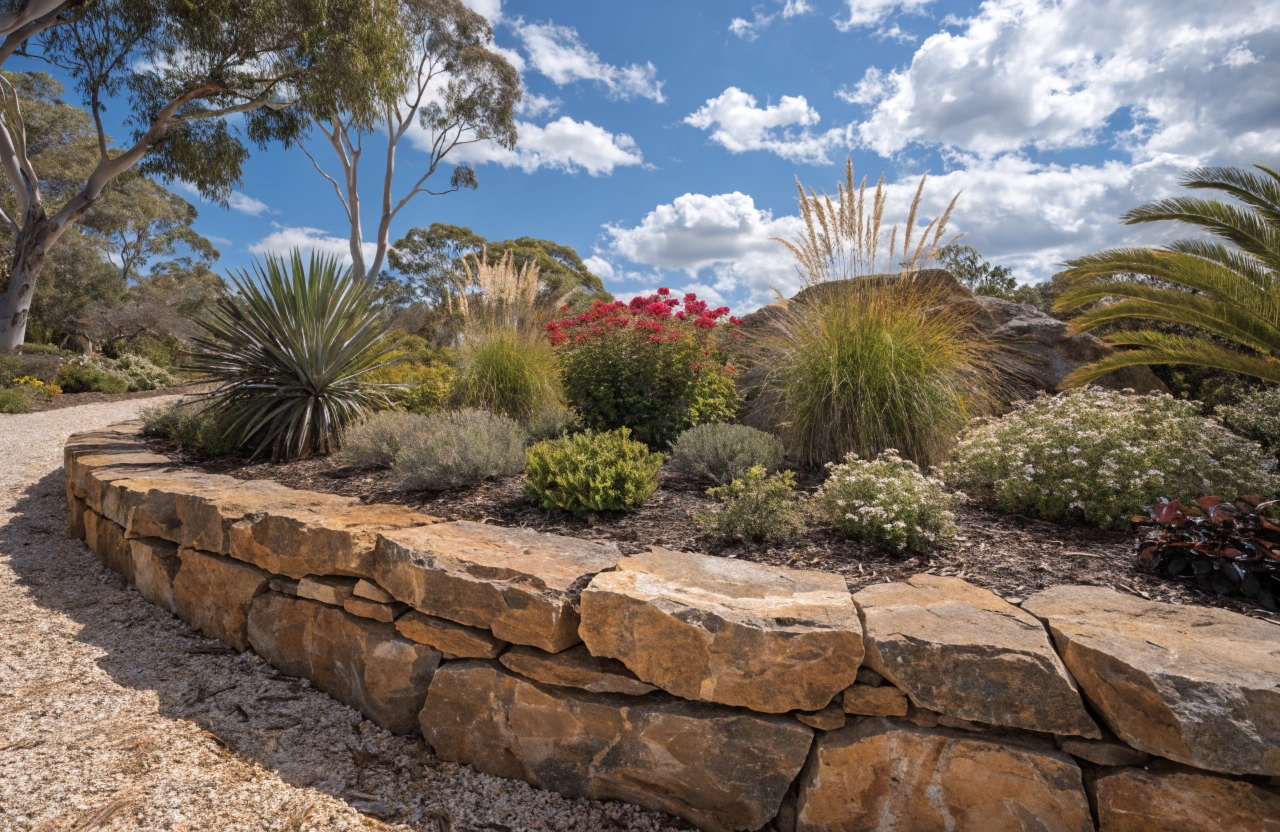
Drainage Behind Retaining Walls — The Factor That Determines How Long Your Wall Lasts
If there’s one thing that separates a retaining wall that’s still performing in twenty years from one that’s leaning and cracking inside five, it’s what happens behind the wall during construction — specifically, the drainage.
When rain falls on a Newcastle property, water moves through the soil profile and accumulates behind retaining walls. Without a proper drainage system to redirect that water away from the wall structure, pressure builds up in the soil mass behind the wall. That pressure — hydrostatic pressure — is invisible from the front face of the wall, but it’s working against the structure constantly. Over time, it causes walls to bow outward, crack at the base, or pull away from adjacent structures.
What Proper Retaining Wall Drainage Involves
• Agricultural drainage pipe laid at the base of the wall behind the footing, directing water to a designated outlet point
• Gravel backfill directly behind the wall face — free-draining material that allows water to move freely to the pipe rather than sitting against the wall structure
• Geotextile filter fabric where required to prevent fine soil particles from migrating into and blocking the drainage layer over time
• Outlet positioning that actually takes water somewhere — not just into the adjacent garden bed
Why This Gets Skipped
Drainage adds time and material cost to an installation. On a competitive quote, it’s one of the first things a low-price operator will quietly leave out. You won’t see it missing on the day — you’ll see it in five years when the wall starts to move.
We install drainage behind every retaining wall we build. It’s not an optional extra.
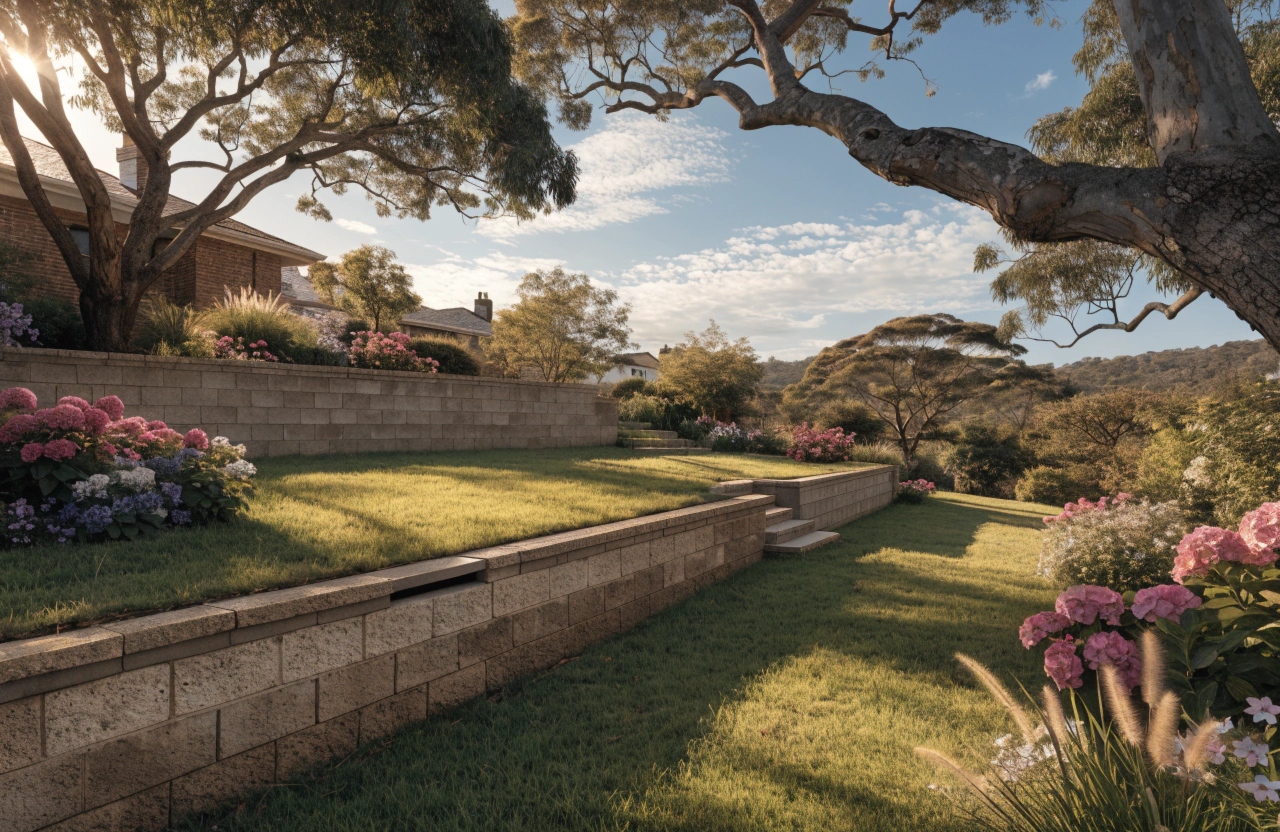
Why the Retaining Wall Installer You Choose Matters More Than the Material
Newcastle has no shortage of contractors who’ll quote on a retaining wall. Landscapers, handymen, general builders — plenty of people will take the job. What varies enormously is what actually gets built, and whether it’ll still be standing and straight a decade from now.
A retaining wall isn’t a job where a competent generalist and an experienced specialist produce the same outcome. The structural demands are specific. The drainage requirements are non-negotiable. The council and engineering obligations are real. And the consequences of getting it wrong — wall failure, property damage, council enforcement — fall entirely on the homeowner, not the person who installed it.
What Sets Experienced Retaining Wall Installers Apart
• Site-specific assessment before any design or material decision is made
• Correct footing preparation for the wall type and soil conditions — not a one-size-fits-all approach
• Drainage installed as standard, not as an upsell
• Familiarity with Newcastle council approval processes across Newcastle City, Lake Macquarie, and Maitland LGAs
• Relationships with local structural engineers for walls that require certification
• Clean, accurate construction — correct batter, correct alignment, correct height throughout
We’ve been building retaining walls across Newcastle and the Hunter Region long enough to have seen what happens when corners get cut. Walls that looked fine at handover and failed inside three years. Drainage omitted on steep clay blocks. Footings poured without proper excavation. We build walls the way we’d want one built on our own property — because that’s the only standard that makes sense.
Frequently Asked Questions — Retaining Wall Installation Newcastle
Retaining wall costs vary significantly depending on wall height, length, material choice, site access, drainage requirements, and whether engineering or council approval is needed. Concrete sleeper walls for a standard residential block typically start from $400–$600 per linear metre installed, with sandstone and engineered block systems sitting higher. The only way to get an accurate figure for your specific site is a proper on-site assessment — ballpark numbers without a site visit are rarely reliable.
In NSW, retaining walls over 600mm in height generally require development approval. Walls near boundaries or existing structures may require approval regardless of height. We assess your specific situation at the initial site visit and manage the approval process where it’s required.
A properly installed concrete sleeper or sandstone wall with correct drainage behind it should last thirty years or more with minimal maintenance. Timber sleeper walls have a shorter lifespan — typically fifteen to twenty five years depending on conditions. The single biggest factor in wall longevity is drainage quality during installation.
Boundary walls have specific council requirements and often require neighbour notification or consent depending on height and location. This is something we identify and address at the assessment stage.
Most residential retaining wall projects run between two and five days depending on size, complexity, access, and whether drainage works are involved. Walls requiring engineering or council approval add lead time before construction begins.
Get Your Retaining Wall Assessment and Quote — Newcastle and Hunter Region
If your block has a slope that’s causing problems, a wall that’s starting to move, or a section of ground that needs to be retained before the next wet season makes it worse — the right move is a proper on-site assessment by an experienced installer.
We work across Newcastle, Lake Macquarie, Maitland, and the broader Hunter Region. Suburbs we regularly service include Merewether, New Lambton, Charlestown, Cardiff, Glendale, Kotara, Wallsend, Adamstown, Fletcher, Thornton, and everything in between. If you’re in the Hunter and you’ve got a retaining wall project — residential or commercial — we want to hear about it.
What Happens When You Get in Touch
• We’ll arrange a time to visit your site at a time that suits you
• We’ll assess the slope, soil conditions, drainage situation, and any council or engineering requirements
• We’ll recommend the right wall type and material for your specific application
• You’ll receive a clear, itemised quote with no hidden costs and no vague line items
There’s no obligation. If the job’s not right for us or the timing doesn’t work, we’ll tell you straight. What we won’t do is give you a number over the phone without seeing your site — because that’s not how you end up with an accurate quote or a wall that performs the way it should.
Call us today or fill in the contact form to book your retaining wall assessment.
Newcastle’s blocks don’t get less steep. Get it sorted properly, once.
