
Paving for New Builds and Knockdown Rebuilds in Newcastle
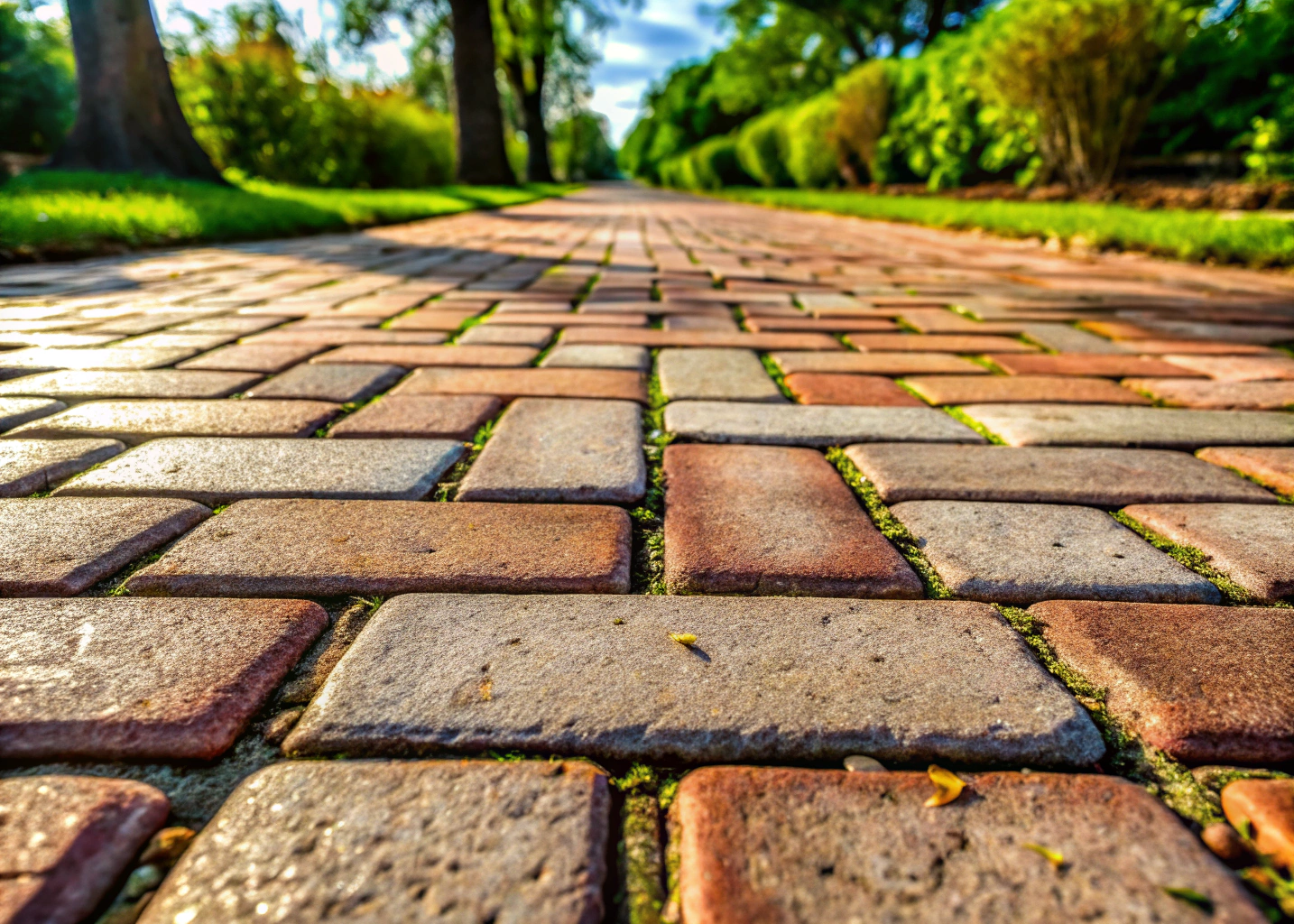
New builds and knockdown rebuilds across Newcastle are one of the most common points where homeowners get to start the outdoor space completely from scratch — and it’s one of the best opportunities to get the paving right from the ground up, rather than working around what was already there.
We work regularly with homeowners and builders across the Hunter Region on new build projects in suburbs like Fletcher, Maryland, Thornton, and Maitland — as well as knockdown rebuilds in established inner suburbs where the block is clear,d and the outdoor space needs to be designed and built fresh.
The advantage at this stage is that there are no existing surfaces to work around, no levels locked in by old structures, and no compromises forced by what’s already there. Base preparation can be done correctly, drainage falls can be planned properly, and the full paving layout — driveway, entertaining area, pathways, pool surround — can be designed as one cohesive package from the start.
Get in touch early in the build process, ss and we’ll scope the paving properly before the slab goes down.

Paving Applications We Cover Across Newcastle
Paving applications across Newcastle residential and commercial properties vary widely — and a contractor worth hiring should be comfortable across all of them. From a straightforward garden path in Kotara to a full driveway and entertaining area package in Merewether, we handle every surface with the same attention to base preparation, drainage, and finished detail. One business, one standard of work, across every outdoor paving application a Newcastle home or commercial property needs.
✅ Patios and outdoor entertaining areas — level, well-drained surfaces for Newcastle backyards
✅ Driveways — built for daily vehicle load and long-term wear
✅ Pathways and garden paths — clean, stable surfaces connecting spaces around your property
✅ Pool surrounds — slip-resistant finishes that perform through a Newcastle summer
✅ Courtyard and alfresco areas — structured paving for enclosed and semi-enclosed outdoor spaces
✅ Steps and level changes — safe, accurate construction integrated into surrounding surfaces
✅ Commercial hardstand areas — heavy-duty paving for high-traffic sites across the Hunter Region
Sandstone Varieties and Finishes Available in Newcastle
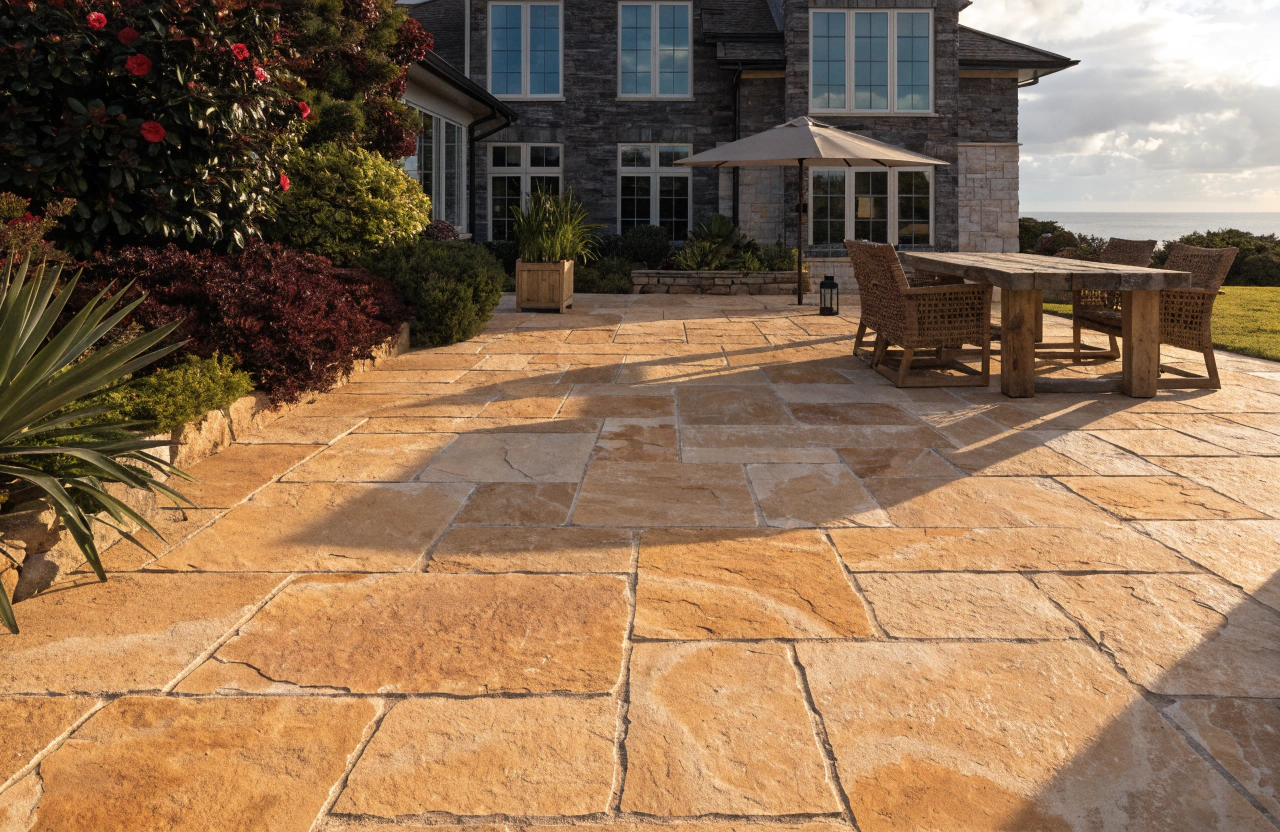
Not all sandstone is the same product. The finish you choose affects how the surface looks, how it performs underfoot, and how well it suits the style of your home. Sawn sandstone delivers a clean, consistent surface with a contemporary character — well suited to modern homes, pool surrounds, and formal alfresco areas. Hand-cut sandstone is rougher and more characterful, and sits naturally with heritage homes, informal garden paths, and cottage-style landscapes through Newcastle’s inner suburbs. Brushed and sandblasted finishes provide improved slip resistance, making them the practical choice for pool surrounds and any surface that sees regular water exposure. Reclaimed sandstone brings aged patina and genuine character to new installations — particularly suited to renovation projects where matching existing stonework or period materials matters.
Tonal variation runs wide across the sandstone palette, from pale creamy whites through warm yellows to deeper ochre and rust tones. Always view physical samples in natural light before committing. Colours read very differently on a screen than they do on the ground.
Sandstone Colours and Tonal Variation — What to Expect
Sandstone is a natural material, and that means no two pieces are identical. Tonal variation is part of what gives a sandstone paved area its warmth and character — but it’s also something worth understanding before you commit to a product.
The sandstone palette runs from pale creamy whites and soft buffs through to warm honey and golden yellows, deepening into rich ochre and rust tones at the darker end of the range. Some products sit consistently within a narrow tonal band. Others carry broader variation across individual pieces, which creates a more natural, layered appearance once laid.
Neither is better — it comes down to the style of your home and the look you’re after. A contemporary Merewether build often suits a tighter, more uniform tone. A heritage cottage in Cooks Hill or Hamilton tends to look right with more variation and movement in the stone.
Viewing physical samples on-site in natural light is the only reliable way to make this call. Catalogue images and screen renders don’t tell the full story.
Choosing the Right Sandstone Product — Why Viewing Samples Matters
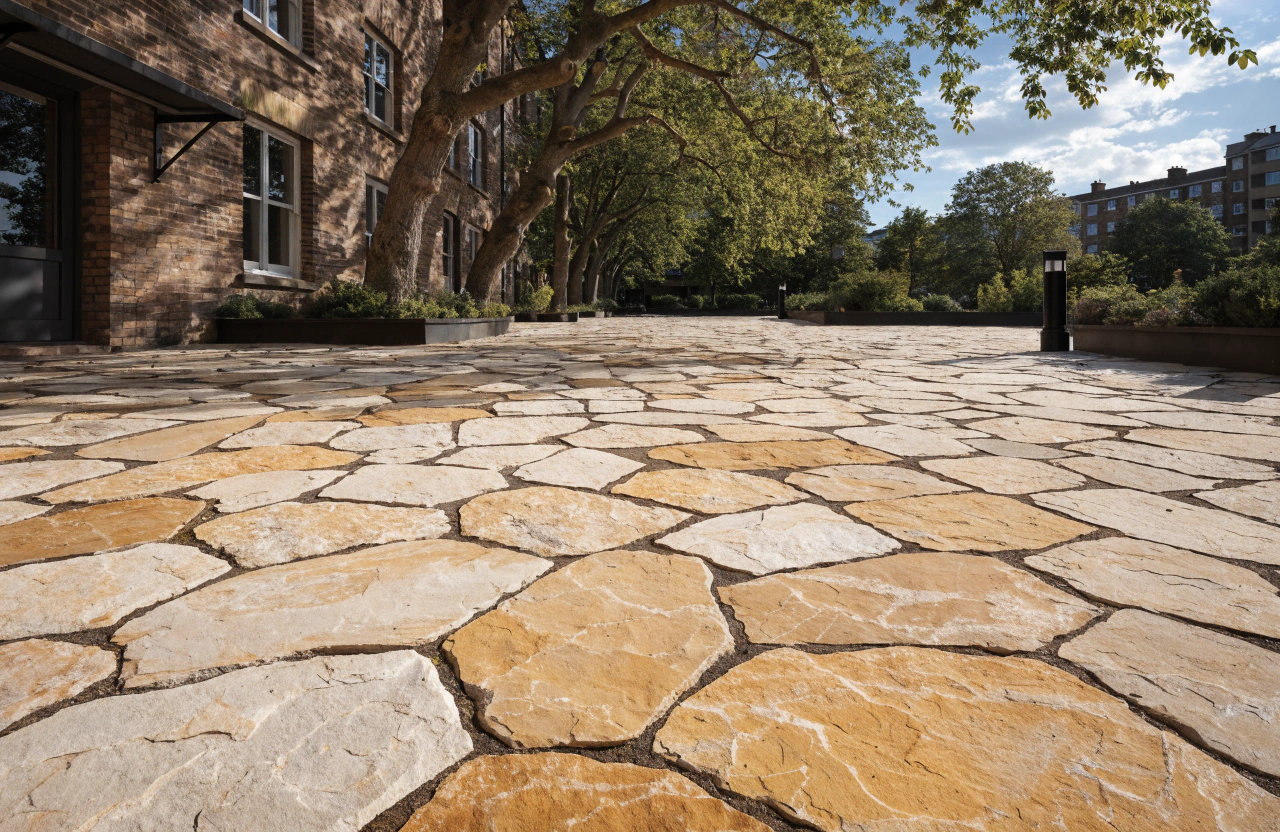
Choosing sandstone from a photo is one of the most common mistakes homeowners make with this material — and it’s easy to understand why it happens. The images look warm, the tones look right, and the product seems like an obvious fit. Then the stone arrives and it reads completely differently against the actual colours of the house, the garden, and the sky.
Sandstone is a natural product. Its tones shift depending on the light conditions, the time of day, and what surrounds it. A pale buff that looks almost white in a supplier’s warehouse can read as a rich honey gold on a north-facing Newcastle patio in afternoon sun. A deep ochre that feels bold in isolation can settle into the landscape beautifully once it’s laid across a full surface area.
Viewing physical samples on your own site — held against your exterior walls, your garden beds, your pool coping — is the only way to make a confident product decision. We bring samples to Newcastle homeowners as part of our quoting process so that conversation happens before any commitment is made, not after. It’s a straightforward step that saves a lot of expensive regret.
Sealing Sandstone Paving in Newcastle’s Conditions
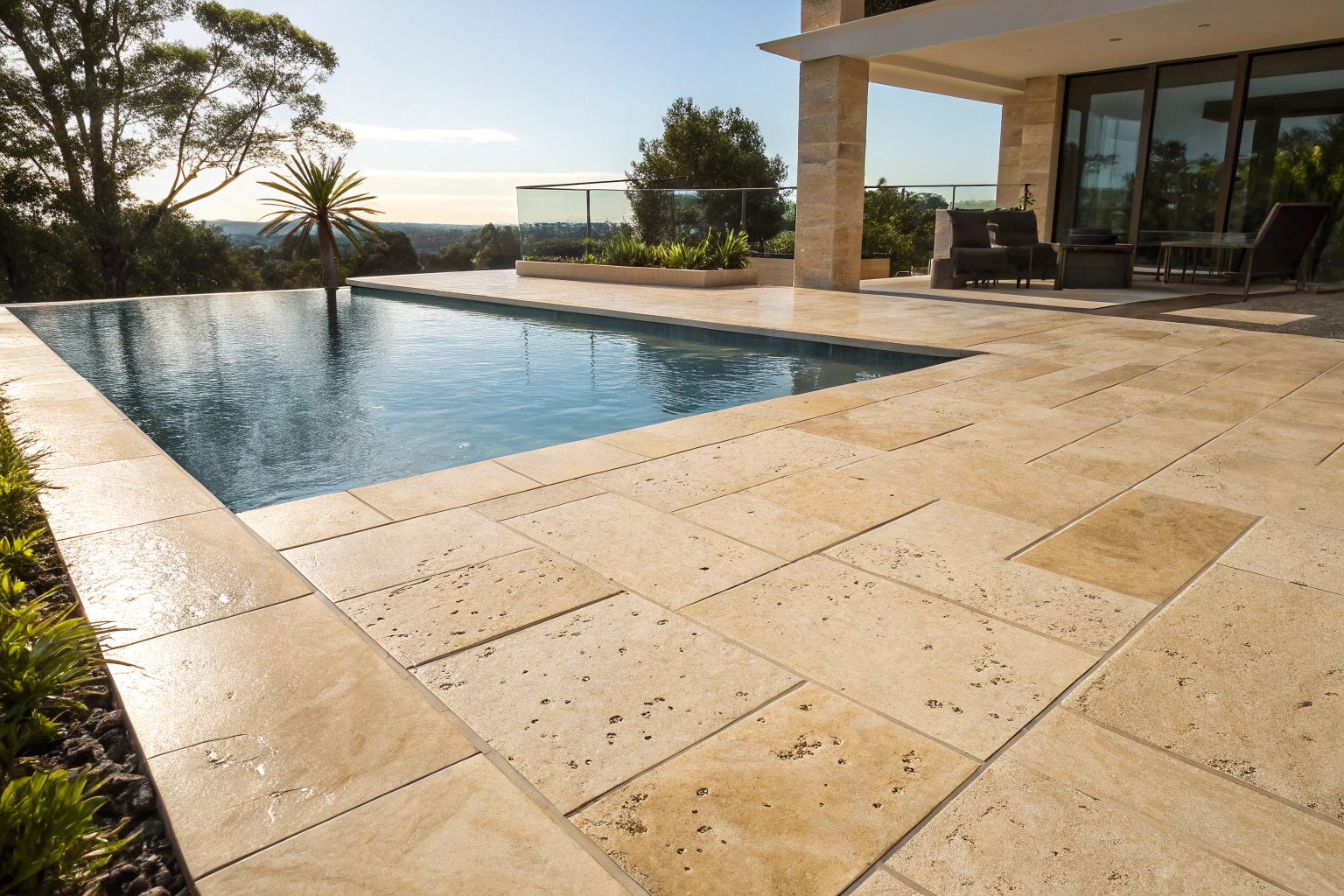
Sealing sandstone isn’t optional in Newcastle — it’s part of doing the job properly. The combination of coastal salt air, summer humidity, and the heavy outdoor entertaining that comes with the Newcastle lifestyle creates a real risk of staining and moisture ingress on unsealed stone.
A quality penetrating sealer soaks into the stone rather than sitting on top of it. It protects against moisture without trapping it, resists oil and food stains from alfresco entertaining, and enhances the stone’s natural colour without giving it an artificial wet or glossy appearance. Done right, the stone still looks like stone — just protected.
Sealing should happen at installation, once the surface is clean and fully cured. From there, resealing every three to five years keeps the protection active. Newcastle’s UV exposure and salt air will work on any surface finish over time — staying ahead of that is straightforward maintenance that significantly extends the life and appearance of the paving.
Reclaimed Sandstone — Aged Character for Renovation Projects
Reclaimed sandstone is one of those materials that genuinely improves with age — and that’s exactly why it works so well in renovation contexts. Where new stone needs time to settle into a landscape, reclaimed sandstone arrives already carrying the patina, weathering, and tonal depth that give a space its sense of history and permanence.
For Newcastle homeowners renovating heritage properties through Hamilton, Cooks Hill, The Junction, or Merewether, reclaimed sandstone offers something that new products simply can’t replicate. It matches the character of existing stonework, complements period architecture, and sits naturally against established gardens in a way that freshly quarried material sometimes takes years to achieve.
It’s also a practical solution for matching or extending existing sandstone paving — where a new section needs to blend with what’s already there rather than contrast with it. Finding reclaimed stone with the right tonal profile takes more sourcing effort than specifying a new product off a pricelist, but the result is a finished space that feels cohesive and considered rather than patched together.
Reclaimed sandstone suits projects where character and continuity matter more than uniformity. If your renovation calls for that, it’s worth having the conversation early — sourcing the right material takes time, and availability varies.
Frequently Asked Questions About Sandstone Paving in Newcastle
Properly installed and sealed sandstone paving lasts decades. Newcastle’s coastal conditions mean sealing is important — a quality penetrating sealer applied at installation and refreshed every three to five years will protect the surface and maintain its appearance long-term.
Brushed and sandblasted sandstone finishes provide good natural slip resistance, making them well-suited to pool surrounds and wet areas. Sawn sandstone can be more slippery when wet, so finish selection matters depending on the application and location.
Yes. Newcastle’s salt air, summer humidity, and outdoor entertaining use create real staining and moisture risks on unsealed stone. A penetrating sealer protects without altering the natural appearance of the stone and should be applied at installation.
The sandstone palette runs from pale creamy whites and soft buffs through warm honey and golden yellows to deeper ochre and rust tones. Tonal variation between individual pieces is natural and part of the material’s character.
In many cases yes, depending on the material and how long the existing paving has been down. We’ll assess the existing surface during the quoting stage and advise honestly on whether a match is achievable.


Get a Sandstone Paving Quote in Newcastle
If you’re thinking about sandstone paving for your Newcastle property — whether it’s a patio, pool surround, garden path, or front entry — we’d love to talk through what you have in mind.
We work with homeowners across Newcastle and the Hunter Region from the first conversation through to the finished surface. That includes helping you choose the right product, bringing samples to the site, and providing a clear, detailed quote before any commitment is made.
Call us today or fill in the quote form below. We service Merewether, New Lambton, Charlestown, Hamilton, Cooks Hill, Cardiff, and throughout the broader Hunter Region.
